%20(1)%20(1).jpg)
Grant writing leaves little room for error. Tight deadlines, complex requirements, and heavy competition make every submission matter. That pressure is why more organizations are turning to AI.
Used well, AI supports the grant writing process without replacing human judgment. It helps teams research funders faster, refine proposal language, and stay organized across multiple applications.
This article explores how to use AI to improve the success rate of a nonprofit’s grant submissions, with practical examples of artificial intelligence for nonprofit funding in real use.
4 Effective ways to use AI for grant writing for nonprofit success
Grant writing is rarely a single task. It is a chain of decisions that starts with finding the right opportunity and ends with proving impact. An AI management tool helps at each stage by reducing friction, improving clarity, and supporting better choices.
When used with intention, nonprofit grants use AI to strengthen the entire grant writing process without removing human judgment.
1. Grant discovery and research become faster and more focused
Many grant efforts fail before writing even begins. Teams spend hours chasing opportunities that are not a strong fit or miss deadlines because research takes too long. AI changes this by narrowing the search early and directing attention to grants that align with an organization’s goals.
Instead of relying on manual searches and spreadsheets, AI analyzes patterns across funding databases and past awards. This allows nonprofits to prioritize quality over volume and focus their writing efforts where they have the best chance of success.
With AI-powered grant research, nonprofits can:
- Match funding opportunities to their mission, location, and past awards
- Get early alerts for new and relevant grants
- Estimate how well their organization fits a specific funder
This shift alone saves time and reduces burnout across development teams.
2. Grant writing moves from blank pages to clear drafts
Writing a grant proposal from scratch is where momentum often stalls. Teams face tight deadlines, long applications, and pressure to sound both compelling and precise. Artificial intelligence for nonprofit funding supports this stage by removing the hardest first step: getting started.
AI tools assist by analyzing funder requirements and generating structured drafts that align with what reviewers expect to see. This does not replace human storytelling or strategy. It gives writers a clearer path forward.
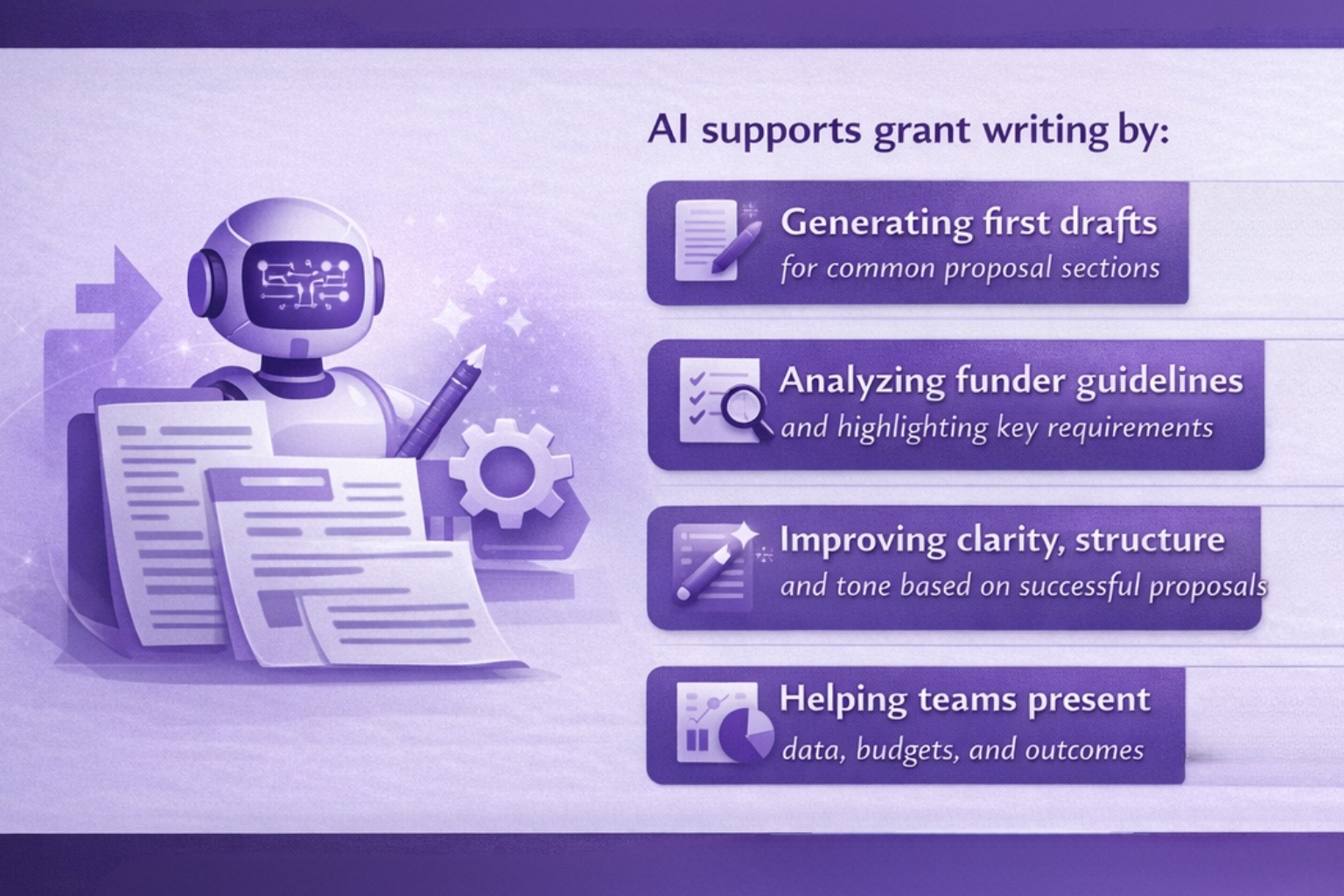
AI supports grant writing by:
- Generating first drafts for common proposal sections
- Analyzing funder guidelines and highlighting key requirements
- Improving clarity, structure, and tone based on successful proposals
- Helping teams present data, budgets, and outcomes more clearly
With less time spent wrestling with wording, teams can focus on refining the message and strengthening the impact case.
3. Project tracking supports stronger future grant applications
Grant writing does not stop after an award is received. Strong execution and clear reporting shape how funders view an organization long-term, and AI supports this by keeping delivery and reporting organized throughout the project lifecycle.
By tracking progress in real time, AI reduces last-minute reporting stress and ensures that outcomes are documented as they happen. This creates a reliable record that can be reused across future proposals.
AI helps by:
- Tracking progress against grant deliverables
- Pulling data automatically for reports
- Flagging risks early before small issues grow
- Keeping documentation organized for future applications
Clear follow-through builds trust with funders and makes future grant writing more credible and efficient.
4. Impact measurement becomes easier to explain and reuse
Funders want results, not just intentions. Measuring impact has always been challenging, especially when data lives across multiple systems. AI simplifies this by connecting performance data directly to grant outcomes.
Instead of manually calculating metrics or searching for past results, nonprofits gain ongoing visibility into what works. This insight strengthens both reporting and proposal writing.
With AI-supported analytics, teams can:
- Monitor outcomes in real time
- Track cost efficiency and program performance
- Identify what makes past projects successful
- Reuse strong data points in new grant proposals
Over time, this creates a feedback loop where every funded project improves the next submission.
Blending AI efficiency with human insight in grant proposals
AI can strengthen grant proposals, but only when it is used with care. Grant reviewers still look for clarity, honesty, and a genuine understanding of community impact. AI works best as a support tool, not a shortcut.
Before relying on AI, organizations should set clear boundaries around how and where it is used in the writing process.
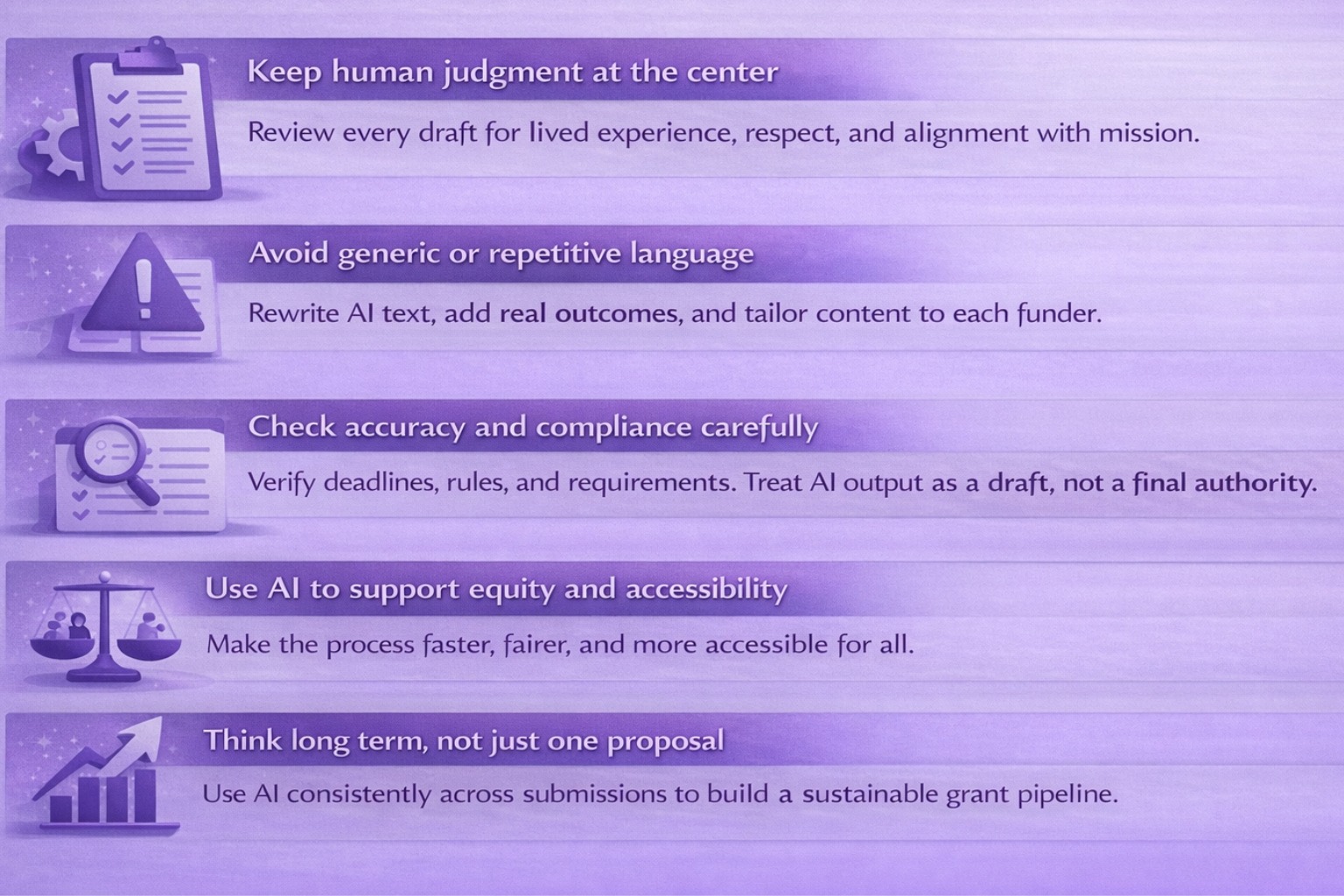
Keep human judgment at the center
AI can draft, organize, and refine language, but it cannot fully understand lived experience or local nuance. Every proposal still needs a human review to ensure the story is accurate, respectful, and aligned with the nonprofit’s mission.
Strong grant writing happens when AI handles structure and efficiency while people shape meaning and intent.
Avoid generic or repetitive language
One risk of overusing AI is proposals that sound polished but are empty. Funders read hundreds of applications and quickly spot vague or repetitive wording.
Nonprofits should:
- Rewrite AI-generated sections in their own voice
- Add specific examples and real outcomes
- Tailor language to each funder’s priorities
This keeps proposals distinct and credible.
Check accuracy and compliance carefully
AI can summarize guidelines and highlight requirements, but it can still miss nuance. Deadlines, eligibility rules, and reporting obligations must always be verified manually.
Treat AI output as a draft, not a final authority.
Use AI to support equity and accessibility
When used thoughtfully, artificial intelligence for nonprofit funding can help smaller teams compete with larger organizations. It levels the field by reducing time barriers and improving clarity.
At the same time, nonprofits should ensure AI use aligns with ethical standards, data privacy requirements, and funder expectations.
Think long term, not just one proposal
The real value of AI comes from consistency. Using it across research, writing, and reporting creates a stronger grant pipeline over time.
When nonprofits learn how to use AI to improve the success rate of a nonprofit’s grant submissions, they move from one-off wins to sustainable funding growth.
How AI changes the nonprofit grant writing workflow
The biggest shift does not happen when a nonprofit uses AI once. It happens when AI becomes part of the daily grant writing process, where small efficiencies compound over time and reshape how teams plan, write, and submit proposals.
Instead of treating each grant as a one-off effort, nonprofits begin working from a system. Research is faster, writing is more consistent, and reporting feeds into future applications, creating sustained momentum across the workflow that manual processes struggle to maintain.
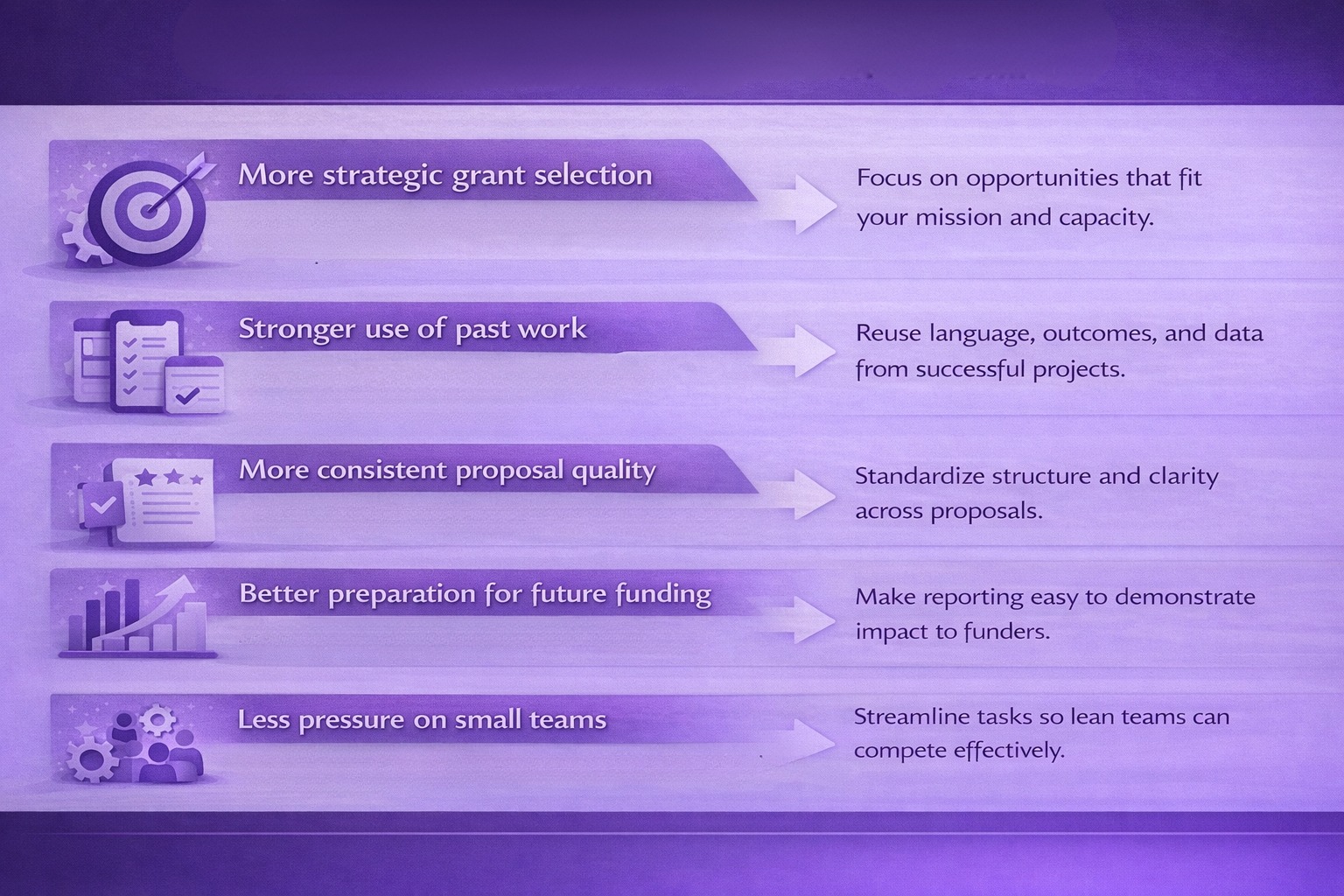
When AI is used across the workflow, nonprofits often experience the following changes:
- More strategic grant selection: Teams spend less time chasing poor-fit opportunities and more time focusing on grants that align with their mission and capacity.
- Stronger use of past work: Language, outcomes, and data from successful projects are easier to find and reuse, reducing repeated effort across applications.
- More consistent proposal quality: AI helps standardize structure and clarity, so proposals feel cohesive even when multiple people contribute.
- Better preparation for future funding: Reporting data flows into new submissions, making it easier to demonstrate impact and build credibility with funders.
- Less pressure on small teams: By reducing manual work, AI allows lean teams to compete without burning out or sacrificing quality.
This is where artificial intelligence for nonprofit funding delivers lasting value. It supports better habits, not shortcuts.
Understanding how to use AI to improve the success rate of a nonprofit’s grant submissions is about building systems that grow stronger with each application, not just faster with one.
Use data and automation to strengthen every grant submission
Grant writing works best when it is built on clarity, consistency, and evidence. AI brings those elements together by connecting data, automation, and human insight across the entire grant process, enabling more precise and connected decision-making from opportunity discovery through to outcome reporting.
Used thoughtfully, AI does more than speed things up. It supports better decisions, more credible proposals, and a grant workflow that improves with each submission, creating a more stable and sustainable funding strategy over time.
_light%201.avif)