%20(2).jpg)
What if you could spot project risks before they become real problems? AI-driven risk assessment makes this possible. It turns risk management from a reactive guesswork into a proactive strategy. It analyzes complex data to flag issues you might otherwise miss.
In this article, you’ll discover the benefits of AI for risk analysis and practical steps for implementing it in your projects.
Let’s dive in!
How AI Is Transforming Project Risk Assessment: 4 impacts you need to know
AI-powered risk management is transforming modern project delivery. With an AI project management tool, organisations can analyse vast data, spot early warning signs, and reveal risks long before traditional methods do.
Below are the core impacts AI is driving across modern risk assessment practices.
1. Earlier and More Accurate Risk Detection
AI excels at identifying subtle indicators of trouble long before they appear in traditional reports. With the support of advanced AI-powered project risk detection software, teams gain earlier and clearer visibility into potential issues.
- Subtle schedule deviations
- Hidden cost or resource trends
- Irregular communication patterns
This early visibility transforms risk mitigation from reactive firefighting into strategic prevention.
2. Smarter, Real-Time Forecasting
Traditional forecasting depends on fixed models and periodic updates. AI, by contrast, learns continuously.
- Continuous model learning
- Real-time data updates
- Adaptive risk predictions
The result is a forward-looking risk profile that adapts as the project evolves, offering a level of accuracy that manual methods simply can’t match.
3. A Wider, More Nuanced Risk Perspective
AI isn’t limited to predefined categories or narrow data inputs. It takes in everything:
- Procurement delays
- Weather forecasts
- Market fluctuations
- Communication patterns
- Environmental or geopolitical factors
By synthesising data beyond what humans can reasonably review, AI provides a holistic understanding of how multiple variables interact to influence project outcomes.
4. More Objective, Data-Backed Decision-Making
Traditional risk assessments rely heavily on manual reviews and subjective scoring, which can introduce bias or inconsistency. AI changes this by:
- Providing evidence-based insights
- Highlighting data-driven correlations
- Offering transparent risk reasoning that supports better-informed decisions
Human judgment doesn’t disappear; it becomes more informed, more consistent, and more strategically focused.
AI vs. traditional risk assessment: Key differences
Traditional risk assessments rely on expert judgment, historical data, and scheduled updates. They work, but they’re slow, inconsistent, and limited by the amount of data humans can realistically analyze.
AI-driven systems improve on this in three essential ways:
1. Accuracy
AI models evaluate thousands of variables at once, spotting patterns and correlations that humans would never detect manually. This leads to far more accurate risk predictions.
2. Speed
Traditional assessments might happen weekly or monthly. AI analyzes incoming data in real time, updating predictions instantly.
3. Scope
Human-driven methods focus on known risks. AI can incorporate signals from:
- sensor data
- supplier performance
- logistics feeds
- environmental data
- news sources
- communication patterns
This creates a wider lens for spotting issues early - even those no one thought to look for.
How to implement intelligent risk assessment in your projects
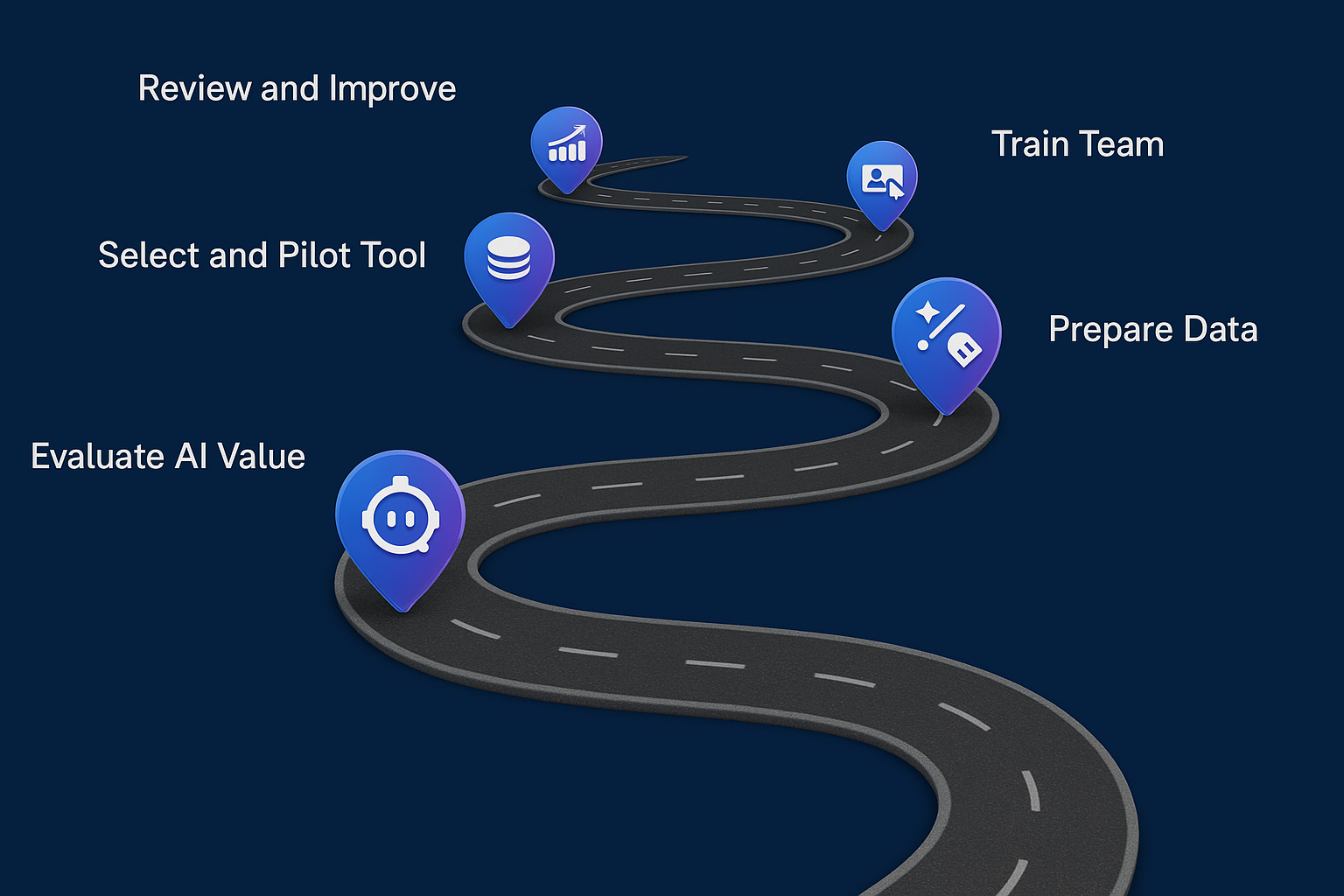
Using AI for risk management isn’t just about installing software. It requires the right preparation, mindset, and processes.
Here’s a practical, realistic roadmap.
1. Evaluate where AI can add value
Identify the high-impact areas where predictive analytics would truly help, such as:
- cost overruns
- schedule slip indicators
- resource allocation bottlenecks
- quality or safety risks
You don’t need to overhaul your entire operation at once.
2. Prepare and clean your data
AI is only as good as the data it receives.
Focus on:
- consolidating fragmented data sources
- fixing inconsistencies
- standardizing formats
- improving documentation habits
📌Did you know? Strong data practices aren’t just technical, they’re ethical too. Learn more about ethical considerations in AI-assisted project management.
3. Select an AI risk assessment tool and pilot it
Choose an AI risk solution that integrates well with your existing systems.
Start small:
- test on one project
- gather feedback
- compare predictions vs. actual results
- refine the workflows
This reduces resistance and builds trust in the model.
4. Train your team and roll out gradually

AI doesn’t replace humans - it elevates their decision-making.
Make sure your team understands:
- what the AI is monitoring
- how predictions are calculated
- how to interpret risk alerts
- when human judgment overrides the model
Good adoption depends on clarity and confidence.
5. Review, adjust, and improve
AI models get better over time, but only if you:
- feed them updated data
- monitor their outputs
- retrain them on new patterns
- incorporate team feedback
Think of implementation as a continuous improvement loop.
Best practices for making AI risk analysis truly effective
Implementing AI is one thing; getting real value from it is another. The teams that benefit the most aren’t just using AI tools; they’re building the right habits and mindsets around them.
Here are a few practices that make a noticeable difference:
Promote a data-driven culture
Encourage teams to look at the numbers, patterns, and insights instead of relying solely on gut feelings or past experience. When people start trusting data as much as they trust their instincts, risk conversations become clearer, faster, and far less subjective.
Maintain human oversight

AI is great at spotting trends and anomalies, but it doesn’t understand context the way people do. Let the AI surface potential issues, but ensure humans make the final judgment call, especially in situations involving nuance, politics, or strategic trade-offs.
Choose transparent models
Teams are far more likely to adopt AI when they understand why the system is flagging a risk. Prioritize tools that explain their reasoning in plain language instead of feeling like a mysterious “black box.” Transparency builds confidence.
Protect sensitive data
AI systems depend on large amounts of project information, much of it confidential. Make sure you’re following strong privacy standards and security practices, so teams feel safe contributing accurate data.
Keep learning and adapting
Projects evolve, markets shift, and new risks emerge. Review your AI models periodically, refresh them with recent data, and stay open to refining your approach. The more your AI system learns, the more valuable it becomes.
Real-world examples
AI-powered risk analysis isn’t theoretical; it’s already reshaping major industries.
Here are five standout examples.
JPMorgan Chase: Contract risk & compliance
JPMorgan’s COIN (Contract Intelligence) system reviews legal documents and identifies risk clauses automatically.
Results:
- 360,000 hours of manual review saved each year
- far fewer servicing errors
- improved detection of compliance risks
💡 Insight: Early detection only matters if risks are communicated quickly and clearly. Here’s how to write an early warning report for your project.
Google: Data center reliability & outage prevention
Google’s DeepMind models predict temperature, pressure, and system stress to avoid failures in data centers.
Results:
- 40% reduction in cooling energy
- significantly lower outage risks
- more stable system-wide performance
Amazon: Supply chain disruption prediction
Amazon uses predictive modeling to evaluate variables such as weather, supplier delays, and transportation conditions.
Results:
- 35% fewer supply chain disruptions
- 20% better forecasting accuracy
- leaner, lower-cost logistics
These examples show how predictive analysis can reduce uncertainty, save time, and improve outcomes across sectors.
Autodesk: Reducing construction risk before work begins
Autodesk has built AI-powered risk assessment and management directly into its Construction Cloud platform. By analyzing historical project data, site conditions, and even weather patterns, the system can flag safety and scheduling risks long before teams step onto the job site.
Results:
- 40% fewer safety incidents
- 25% reduction in delays
- significant savings through early design clash detection
Roche: Improving treatment safety in healthcare
Roche’s platform uses AI to analyze clinical studies, patient histories, and treatment data to identify risks earlier in the care process.
Results:
- shorter time from diagnosis to treatment
- better identification of patient-specific risks
- more accurate matches for clinical trials
The future of AI-driven risk management starts now
AI is reshaping risk assessment in a fundamental way - moving teams from reactive problem-solving to proactive prevention. With better accuracy, real-time monitoring, and a wider scope, AI helps project teams make smarter decisions and avoid costly surprises.
Teams adopting AI-powered software for detecting and managing project risks can catch issues earlier, reduce uncertainty, and make more confident decisions throughout the project lifecycle.
Dart offers built-in predictive risk features that help teams stay ahead of potential problems.
The future of project success depends on anticipating what comes next. AI is now making that possible.
Frequently asked questions
How can AI assist with risk analysis and project deadlines?
AI can analyze historical data, schedules, and real-time project signals to flag early indicators of delays or cost overruns. It continuously monitors progress and identifies patterns humans may miss, helping teams adjust timelines before small issues turn into blockers.
How accurate is artificial intelligence for risk assessment?
Artificial intelligence is highly accurate when it’s trained on high-quality, comprehensive data. It identifies correlations and trends across thousands of variables. While not perfect, AI consistently reduces blind spots and improves the precision of risk predictions.
Can AI be used to improve risk prediction models?
Yes, AI enhances prediction models by learning from past project outcomes and adjusting its forecasts as new data becomes available. Machine learning allows the system to refine its accuracy over time, especially in complex environments with many changing factors.
How is AI transforming risk management?
Instead of waiting for issues to appear, AI detects early warning signs by analyzing data continuously and at scale. This helps organizations make faster decisions and prevent problems before they escalate.
How can AI and risk management work together?
AI provides the data-driven insights, while risk managers bring context, strategy, and judgment. Together, they create a balanced system where technology surfaces potential threats and humans determine the best course of action.
_light%201.png)