%20(1).jpg)
Traditional project management tools help you organize work, but they don't do the work for you. You still click, drag, update, and chase. Every single day.
Here's how using AI agents can improve project management: they change that equation entirely. Unlike the software you're used to, AI agents don't just sit there waiting for input. They actively monitor your projects and make decisions based on real-time data.
Think of them as tireless digital teammates who accelerate your workflow, never miss a detail, and handle the repetitive work that drains your time and energy.
What makes AI agents different from traditional tools
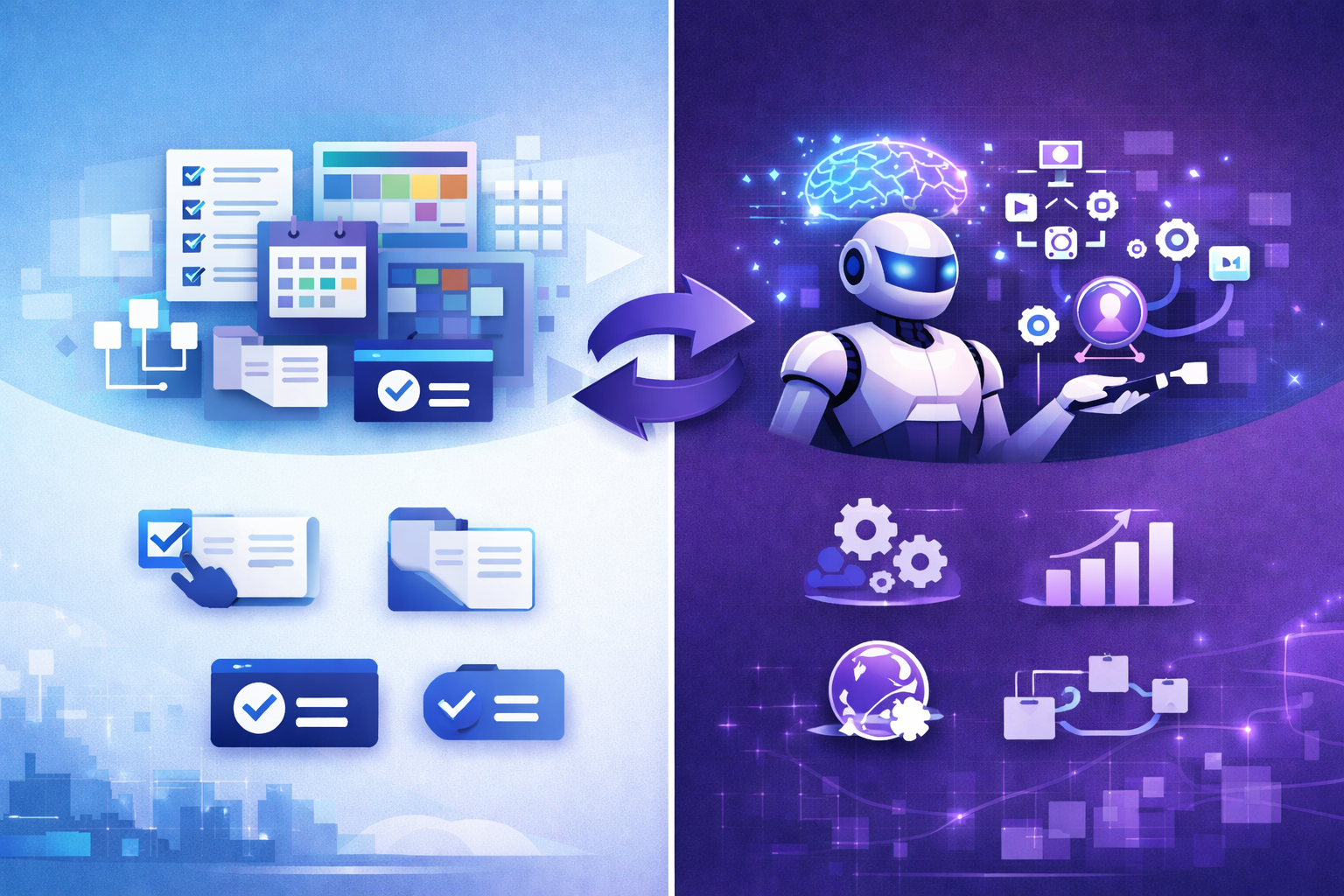
Regular project management tools are reactive. You tell them what to do, and they do it. These platforms are essentially sophisticated to-do lists with collaboration features.
AI agents flip that script.
These autonomous software systems execute tasks like updating project statuses, reallocating resources, coordinating across departments, and sending automated reports using live data pulled from your existing tools.
Here's the fundamental difference:
How AI-powered agents transform daily project management tasks
Now that you understand what sets AI agents apart, let's look at how they actually change your daily work, from task automation to intelligent decision-making. These are practical applications teams are using right now to eliminate bottlenecks and reclaim their time.
Project planning and scheduling automation
Remember spending hours building project plans? AI agents generate comprehensive project schedules in minutes.
They analyze historical project data from your past projects, assess team workload, and understand task dependencies. Based on this information, they create realistic timelines that account for how your team actually works, not how you wish they worked.
When changes happen (and they always do), AI agents automatically adjust the entire schedule. No more manually shifting hundreds of tasks because one deadline moved.
Intelligent workflow and resource allocation
Assigning the right person to the right task sounds simple. In practice, it's a constant juggling act.
AI agents examine your team's current workload, strengths, and speed, along with task priority levels and deadlines, to automatically suggest or assign tasks in ways that improve efficiency and fairness. They see the full picture across all your projects simultaneously.
The result? Less burnout, fewer bottlenecks, and better momentum. It's like having a traffic controller for your team's to-do list.
Predictive risk management
AI agents don't wait for you to notice issues - they monitor project activity to spot early warning signs like delays, stalled tasks, or missed dependencies.
They flag potential delays by observing subtle signals:
- Slow approval cycles
- Overloaded team members
- Tasks sitting idle for too long
- Dependencies that could create bottlenecks
Then, they suggest actionable fixes before minor issues become major fires.
Real-time status updates and reporting
Status reports are necessary but soul-crushing. No more compiling data from multiple spreadsheets and tools into manual reports. AI agents eliminate this time sink completely.
They continuously measure progress across all your tools and platforms, then automatically generate accurate status updates. Your stakeholders can view progress through a centralized dashboard without waiting for manual updates.
Stakeholder communication management
AI agents analyze email threads, meeting notes, and communications for sentiment, identifying dissatisfaction or concerns early. They can draft personalized status updates, prepare meeting agendas, and even generate executive summaries.
More importantly, they catch communication gaps before they become relationship problems.
Key benefits of AI agents for organizations
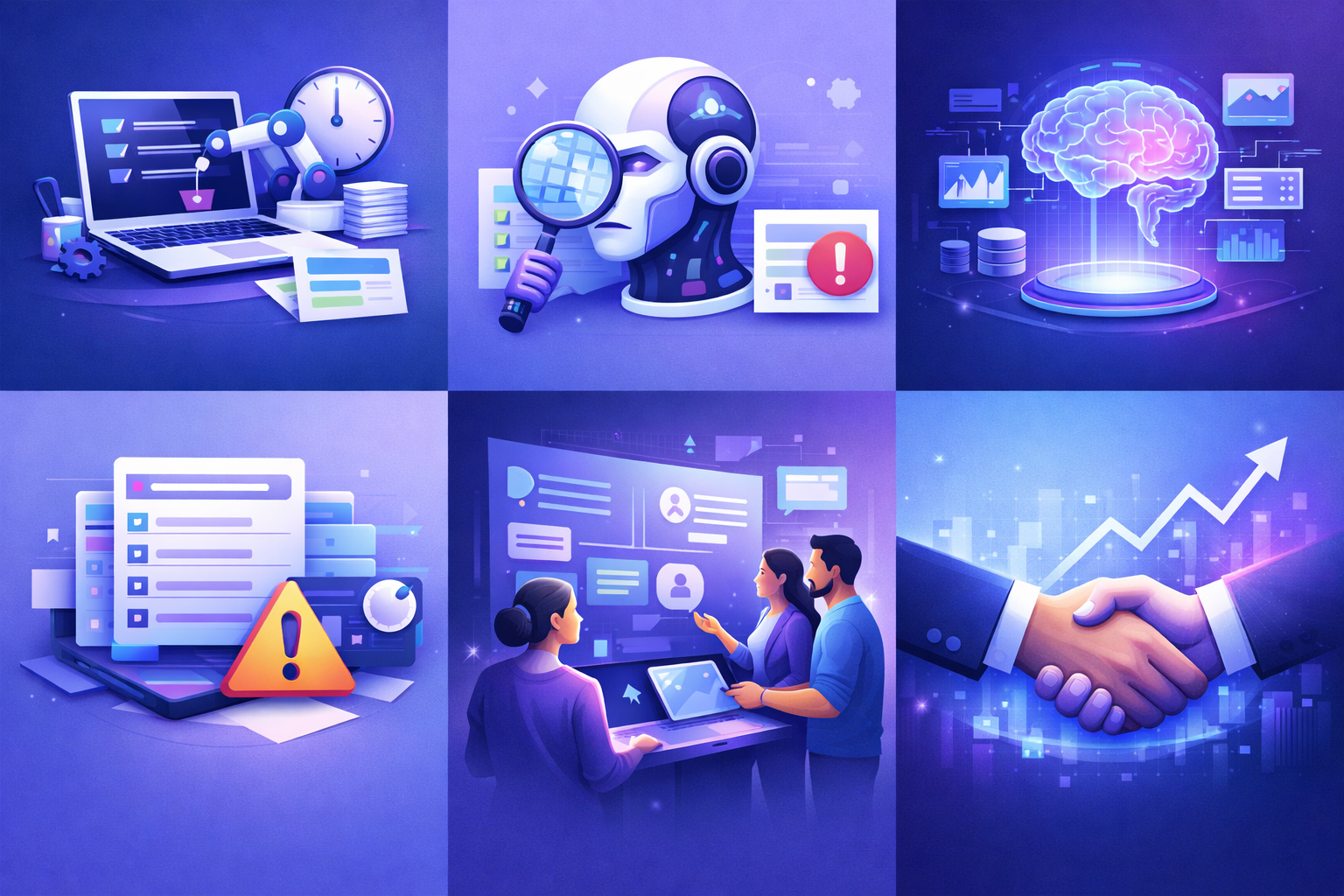
The specific tasks AI agents handle translate into measurable improvements across entire organizations. Here's what companies report after implementing AI project management software.
Massive time savings on administrative work
Organizations implementing AI-powered project management systems report cutting project planning work by 30%. This includes time spent on status reports, schedule updates, data entry, and progress tracking.
Consider what your team could accomplish if project managers spent half as much time on paperwork and twice as much on strategic planning, stakeholder relationships, and problem-solving. The productivity gain is transformative, allowing teams to streamline operations across the board.
Dramatically reduced human error
Everyone makes mistakes, especially when tired, distracted, or handling repetitive tasks. AI agents process information consistently without fatigue. They flag data discrepancies automatically and maintain accuracy levels that manual processes can't match over extended periods.
Proactive decision-making with data-driven insights
Using predictive analytics, AI agents analyze vast amounts of project data to surface patterns humans would miss. Maybe tasks always slow down on Wednesdays. Perhaps a particular stakeholder is involved in the most delayed reviews.
These insights let you address root causes instead of constantly firefighting symptoms.
Improved team collaboration and productivity
AI agents create seamless communication by automatically distributing relevant information to the right people at the right time. Everyone stays aligned on project status without endless meetings and email chains.
Early detection of scope creep
When new tasks start piling up outside the original agreement, AI agents flag the potential scope creep immediately. That early warning lets you clarify expectations with clients and prevent delivery delays or cost overruns.
Real-world applications in different scenarios

AI agents adapt differently to existing project management contexts and challenges. Here's how they're being deployed across various use cases and industries.
Portfolio management across multiple projects
Managing multiple projects simultaneously presents complex challenges, with competing timelines and resources demanding constant attention.
AI agents work on adjusting timelines across entire portfolios, flag potential resource conflicts, and suggest real-time adjustments. They give senior managers and PMOs a clear view across all initiatives without requiring each project manager to create separate reports.
Compliance and regulatory management
In regulated industries, AI agents are especially valuable as they automatically audit project data against compliance requirements. They flag inconsistencies and recommend corrective actions before audits happen.
💡Pro Tip: Teams can enhance their compliance processes by starting with a structured project audit template that defines what AI agents should monitor and track.
Cross-functional coordination
AI agents can monitor communications and deliverables across departments, identifying when teams need to sync up or when dependencies risk causing delays. This helps keep complex projects with multiple stakeholders moving forward dynamically.
What to know before using AI agents
AI agents offer substantial benefits, but successful implementation requires understanding both their capabilities and limitations. Before diving in, organizations should recognize what AI agents do well and where they still need human judgment.
Data quality concerns
If project management data is incomplete, inaccurate, or of poor quality, it can adversely impact AI algorithms' effectiveness and reliability.
Garbage in, garbage out applies acutely to AI. Your agents are only as good as the data they learn from.
The trust and adoption gap
Many project managers note that "the biggest barrier isn't technology; it's skill gaps and misplaced trust." Teams are unevenly distributed across the AI learning curve.
Some team members eagerly test everything. Others don't know where to begin. This creates adoption friction that training and change management must address head-on.
Integration complexity
Integrating AI agents with your existing tech stack isn't always straightforward. Legacy systems may have compatibility issues with advanced AI tools, requiring significant configuration work or system upgrades.
Bias and fairness issues
AI algorithms can inherit biases from their training data, potentially leading to skewed decision-making in resource allocation, risk assessments, or project evaluations.
Organizations need diverse data management and regular audits to catch these problems before they affect team dynamics or project outcomes.
The limits of current capabilities
AI agents excel at pattern recognition, data processing, and routine decision-making. But they still fall short in areas requiring:
- Emotional intelligence
- Complex stakeholder negotiations
- Creative problem-solving
- Strategic thinking about business context
- Understanding nuanced team dynamics
The role of a project manager still requires a blend of leadership, empathy, and real-time adaptability that only people can bring to the table.
Best practices for scaling AI agent adoption
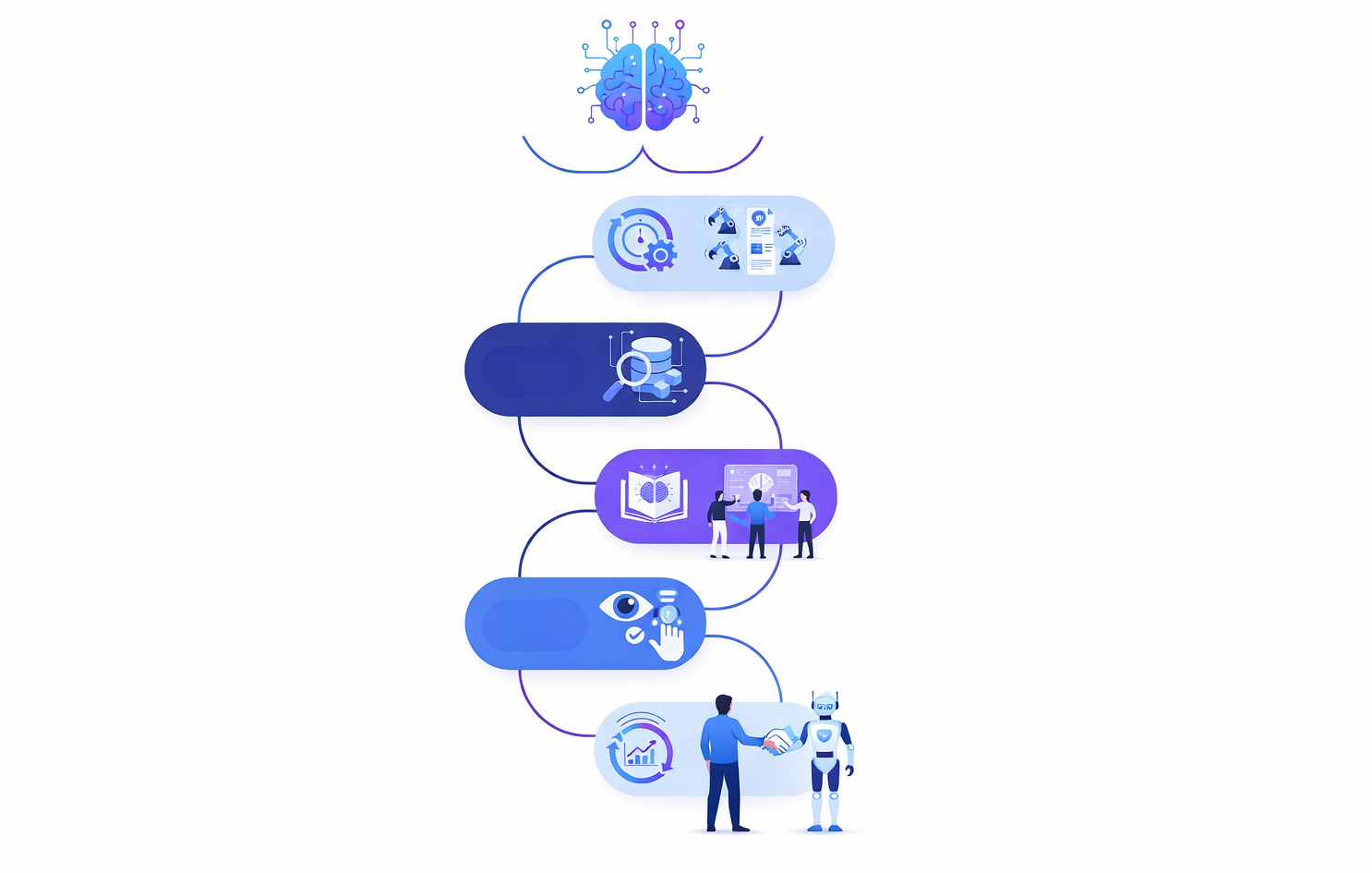
Implementing AI agents successfully requires a thoughtful approach. These practices separate organizations that see real ROI from those that struggle with adoption.
Start with repetitive tasks
Identify the most high-impact, time-consuming administrative work. Create project status reports, meeting summaries, and schedule updates that are well-defined, high-volume, and easy to measure.
Ensure data quality first
Audit your project data before deploying AI agents. Clean up inconsistencies, establish clear data governance, and create standards for how information gets entered. This foundation determines everything that follows.
Invest in team training
Closing skill gaps requires structured AI training and consistent literacy initiatives. Without them, organizations risk both under-utilizing AI capabilities and misusing them in ways that create new problems.
Maintain human oversight
As discussed in the limitations section, AI agents should inform decisions rather than make final calls on high-stakes issues. Establish clear protocols for when humans need to review, verify, or override AI planning and recommendations.
Monitor and iterate continuously
Evaluate how your AI agents perform against specific metrics. Are they actually saving time? Improving accuracy? Reducing stress? Use this data to refine their implementation and expand their role gradually.
Address cultural resistance head-on
Change is uncomfortable. Be transparent about how AI agents will affect roles and workflows. Emphasize that these AI tools augment human capabilities rather than replace them, and back that up with clear examples from your organization.
The future of AI agents in project management
The trajectory is clear. AI models are advancing rapidly, with increasingly sophisticated features rolling out across project management platforms.
Emerging capabilities on the horizon include:
- Autonomous what-if scenario modeling
- Advanced natural language interfaces that feel like conversations
- Deeper integration with business intelligence systems
- Self-improving algorithms that learn from every project
But here's what won't change: the need for skilled project managers who understand people, focus on strategic planning, and organizational dynamics.
AI agents are intelligent co-pilots that handle routine tasks, surface smarter insights, and help you make better decisions faster. Artificial intelligence can’t replace project managers, but it can make good project managers exceptional.
Getting started with AI agents
The organizations winning with AI agents aren't necessarily the ones with the biggest budgets or most advanced tech stacks. They're the ones willing to experiment, learn from failures, and adapt quickly.
Project management is evolving faster than ever. AI agents represent the most significant shift in how work gets done since the internet enabled remote collaboration.
The question isn't whether AI agents will transform project management. They already are.
_light%201.avif)