%20(1).jpg)
Imagine your team just wrapped up a major project. Everyone's celebrating, but you're sitting there wondering - did we actually succeed? Were we at our best? Or did we miss chances to do even better?
Here's something that might surprise you: teams with high morale are more productive, and companies with engaged employees outperform those without. Yet, managers admit they struggle to accurately measure their team's performance beyond basic output metrics.
This guide will teach you how to measure the success of a team using expert tips and innovative tools that actually work. You'll discover actionable strategies that top-performing organizations use to continuously evaluate and enhance their teams' effectiveness.
3 key indicators to track the success of a team
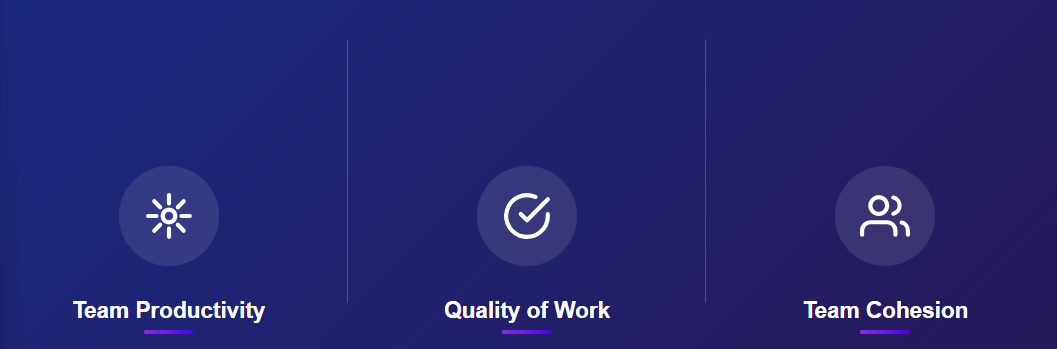
When measuring team performance, several key indicators provide valuable insights into how well your team is functioning. Here are the essential ones you need to watch:
1. Team productivity
Productivity forms the foundation of team success. It's about your team's ability to produce high-quality work efficiently. When productivity levels are high, you'll notice:
- The team works together easily
- Resources are being used efficiently
- Results are delivered within expected timeframes
A professional project management tool can help track productivity by monitoring task completion metrics and priorities.
But here's the thing - productivity isn't just about quantity. A team might complete tons of tasks, but if the quality suffers, overall success takes a hit.
The sweet spot lies in balancing quantity with quality, making sure each task meets the highest standards. Measuring both team efficiency (how well resources are used) and team effectiveness (how well goals are achieved) gives you a clearer picture of overall performance.
2. Quality of work
Quality demonstrates your team's commitment to excellence and professionalism. It reflects the team's ability to:
- Meet or exceed project requirements
- Adhere to high standards
- Produce outcomes that surpass customer expectations
You can measure quality through customer satisfaction ratings, feedback, and peer reviews. But sustaining high-quality work requires a focus on continuous improvement.
Teams should regularly assess their processes, identify enhancement opportunities, and implement strategies to elevate their work.
This commitment not only ensures customer satisfaction but also builds the team's long-term reputation and success.
3. Team cohesion
Team cohesion determines how well your team works together. It's about the level of collaboration, trust, and harmony within the group.
High team cohesion fosters better communication, idea-sharing, and problem-solving while boosting morale, job satisfaction, and overall effectiveness.
For remote teams, cohesion becomes even more critical. Without in-person interactions, managers need to ensure team members use proper communication channels and communicate clearly and effectively.
Employee surveys, team-building exercises, and regular meetings can provide valuable insights into cohesion levels.
Tools for measuring team performance
The right tools and methodologies give you valuable insights into team dynamics, productivity, and effectiveness. They provide a structured approach to measurement, help identify improvement areas, and align team efforts with organizational goals.
The key is combining team performance indices with qualitative feedback, balancing hard data with human perspectives for a complete picture.
Surveys and feedback systems
Surveys and feedback systems are effective ways to gather insights into team performance and satisfaction. Design surveys to capture feedback on:
- Communication effectiveness
- Project collaboration success
- Workload distribution
- Overall team dynamics
Performance metrics and key performance indicators (KPIs)

Performance metrics and KPIs are quantitative measures used to assess team and individual performance. These metrics can be tailored to align with specific objectives. Examples include:
- Project completion rates
- Customer satisfaction scores
- Revenue generated
- Employee turnover rates
Analyzing and interpreting the results
Measuring team performance is just the first step; interpreting the results matters equally. When analyzing team performance metrics, look beyond the numbers. Consider the context in which they're measured and identify underlying factors that may influence them.
Key considerations when interpreting results:
- Look for patterns or trends indicating areas of strength or improvement
- Engage with team members to gather their insights and perspectives
- Compare current metrics with historical data to keep track of projects
- Benchmark your team's metrics against industry standards or competitors for a broader perspective
Addressing areas of improvement
Once you've identified improvement areas, develop action plans to address them. Collaborate with your team to implement these plans, provide necessary support and resources, and regularly measure progress.
Steps to address improvement areas:
- Conduct a root cause analysis to understand underlying issues
- Encourage open communication to address challenges transparently
- Provide necessary support and resources
- Regularly monitor progress and adjust strategies as needed
Creating an environment where teams thrive

Measuring team performance is about building an environment that promotes communication, collaboration, and growth.
Here's how to create the conditions for success:
Build a foundation of transparent communication
Communication drives everything else. Create a safe, inclusive space where team members freely share ideas, concerns, and feedback. This means:
- Active listening: Encourage team members to truly hear each other, not just wait for their turn to speak
- Regular touchpoints: Establish team meetings and one-on-one sessions to ensure everyone's voice is heard
- Constructive dialogue: Ask clarifying questions and provide feedback that helps people grow
Enable collaboration with the right structure
Give your team the tools and opportunities to work together effectively:
- Technology that connects: Implement project management platforms, communication tools, and shared document repositories
- Relationship building: Organize team-building activities, workshops, or retreats where members bond and develop camaraderie
- Strength-based partnerships: Help team members identify and leverage each other's unique abilities
Make recognition part of your culture
Acknowledgment fuels motivation and engagement. Celebrate milestones, achievements, and contributions, both big and small:
- Be specific: Highlight the actual impact of someone's work and how it aligns with team goals
- Enable peer recognition: Implement a program where team members can nominate and appreciate each other
- Recognize both individual and collective wins: Balance personal accomplishments with team achievements
How to balance quantitative and qualitative team success measures
While metrics and KPIs provide valuable quantitative data, measuring team performance and success requires a more nuanced approach that incorporates qualitative insights. An effective measurement system integrates both dimensions.
The limitations of numbers alone
Quantitative metrics tell you what is happening, but often fail to explain why:
- Productivity numbers might be high, but at the cost of team burnout
- Project completion rates may look impressive, but quality could be suffering
- Revenue metrics might be strong while customer satisfaction is declining
Research from Harvard Business Review shows that high-performing teams use balanced measurement systems. They combine team performance metrics with qualitative assessments.
Qualitative measurement techniques
Complement your quantitative metrics with these qualitative approaches:
- Narrative feedback: Collect stories and examples that illustrate team dynamics
- Observational assessments: Regular observation of team interactions and work processes
- 360-degree reviews: Comprehensive feedback from peers, managers, and stakeholders
- Team retrospectives: Facilitated discussions where teams reflect on their own performance
💡Need additional research support? This user research template can help you structure deeper team insights.
Creating your balanced scorecard
Design a balanced scorecard that captures both dimensions:
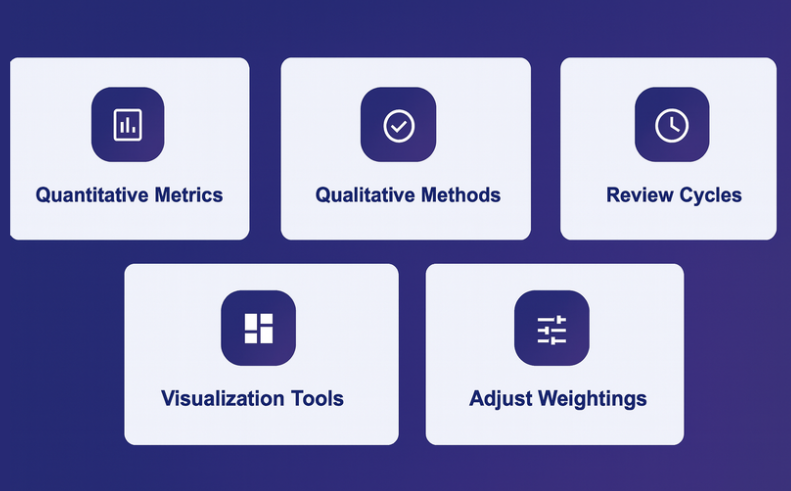
- Identify 3-5 critical quantitative metrics aligned with business objectives
- Select 2-3 qualitative assessment methods that provide context
- Establish regular review cycles that examine both types of data
- Create visualization tools that present the complete picture
- Adjust weightings based on your team's unique challenges and goals
Adapting measurement systems for different team types
Different team types require tailored measurement approaches to accurately assess their success and drive improvement.
Remote and distributed teams
Remote teams face unique challenges that affect how performance should be measured:
- Focus on outcomes over activity: Measure deliverables and results rather than hours logged
- Communication effectiveness metrics: Track response times, clarity of written communication, and meeting efficiency
- Asynchronous collaboration quality: Assess the team's ability to move projects forward across time zones
- Digital tool utilization: Evaluate how effectively the team leverages collaboration platforms
Cross-functional project teams
For teams bringing together members from different departments:
- Knowledge transfer metrics: Measure how effectively information moves across functional boundaries
- Integration success indicators: Track how well deliverables from different functions combine
- Role clarity scores: Assess whether team members understand their unique contributions
- Decision-making efficiency: Measure the time from issue identification to resolution
Team performance for cross-functional groups must weigh collaboration factors more heavily than in traditional structures. These teams benefit from project management tools with cross-functional visibility.
Innovation and R&D teams
Teams focused on creating new products or solutions require different success measures:
- Ideation metrics: Number and quality of new ideas generated
- Experimentation efficiency: Speed and cost-effectiveness of testing concepts
- Learning rate indicators: How quickly the team incorporates feedback and improves
- Portfolio balance measures: Mix of incremental vs. breakthrough initiatives
Measuring performance in innovation contexts means creating a team that values creative output and calculated risk-taking.
Customer-facing teams
For teams working to engage with customers directly:
- Relationship depth metrics: Beyond satisfaction, measure the strength of customer relationships
- Problem resolution effectiveness: Track not just time-to-resolve but quality of resolutions
- Customer success indicators: Measure how well customers achieve their goals with your help
- Voice-of-customer alignment: Assess how accurately the team represents customer needs internally
CRM platforms offer dashboards specifically designed for these metrics, helping leaders measure performance in customer-centric environments.
Build a high-performing team
Learning to measure the success of a team is crucial for running a successful organization. The journey to building high-performing teams requires ongoing commitment to both measurement and culture-building.
When you combine data-driven insights with a supportive environment, you create the conditions where teams naturally excel, and individuals feel valued for their contributions.
_light%201.png)