%20(2).jpg)
Remember the best manager you ever had? What made them so great? Chances are, it wasn't their micromanagement skills. It was likely their ability to listen, support, and challenge you to do your best work.
In this article, we'll walk you through 15 essential tips for how to manage a team in a way that builds morale, drives productivity, and makes work enjoyable for everyone.
Forget the stress of feeling like you have to have all the answers; it's about asking the right questions and guiding your team to find them together.
15 essential team management tips for leading successfully
We’ve all had those “am I doing this right?” moments in leadership. These simple and clear tips on managing a team are the ones we wish we’d had, especially when balancing team and project management.

1. Maintain open lines of communication
An effective communication plan is the foundation of successful team management. As a leader, you need to model good communication practices first.
Key practices:
- Choose the right medium for each message (email, chat, face-to-face)
- Communicate clearly to prevent misunderstandings
- Be available to provide detailed explanations when needed
- Schedule regular one-on-one meetings with team members
👉Pro Tip: For complex teams, clarity starts with structure. Implementing a project management software with role-based permissions is a powerful way to formalize who is responsible for what, eliminating confusion before it starts.
2. Offer constructive feedback
Help your team members identify areas for growth through supportive, specific feedback rather than harsh criticism.
How to give constructive feedback:
- Explain your reason for the conversation
- Share the specific situation that prompted the discussion
- Acknowledge their strengths first
- Suggest concrete steps for improvement
- Summarize their strengths, the issue, and your suggestions
- Follow up later to discuss progress and offer additional support
💡 Dealing with a specific challenge? Even with the best plan, some situations are tougher than others. Here’s how to deal with a team member who is not contributing.
3. Regularly celebrate achievements
Recognition boosts morale and productivity. Celebrate both professional wins and personal milestones to make everyone feel valued.
Ways to celebrate:
- Have teammates sign a congratulatory card
- Give public recognition in team meetings
- Create custom awards for specific achievements
- Take them out for a celebratory lunch
4. Encourage team collaboration
While individual work has its place, collaboration drives creativity, job satisfaction, and retention.
Strategies to promote collaboration include:
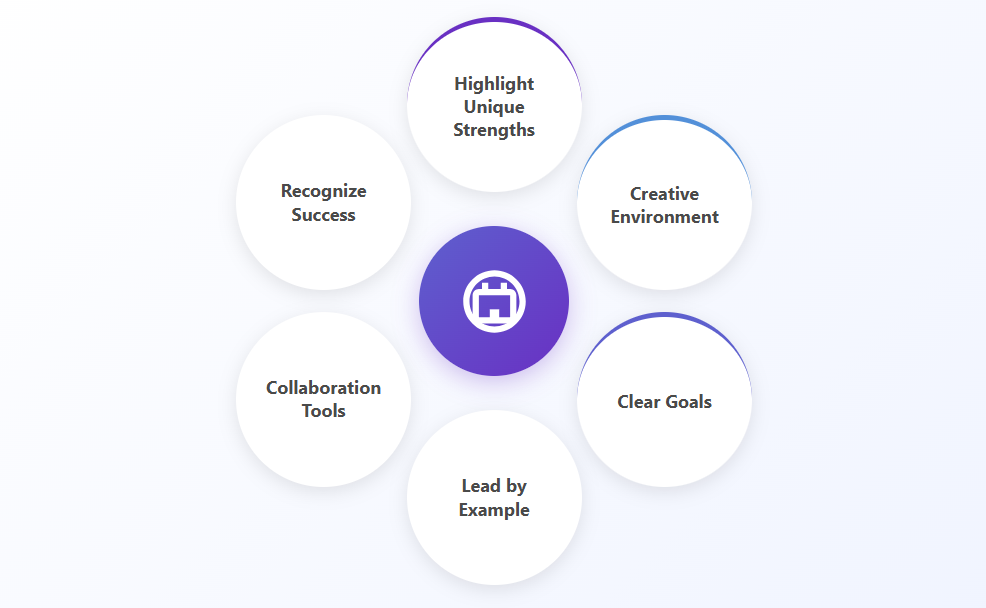
- Highlighting each person's unique strengths
- Creating an environment that welcomes creative thinking
- Ensuring everyone understands the team goals and their role
- Leading by example through your own collaborative behavior
- Using technology that facilitates teamwork
- Rewarding collaborative efforts and shared achievements
5. Master the art of delegation
Keep your team's diverse skills in mind when assigning tasks to the right people. Understand individual strengths, so everyone gets work they're equipped to handle. Consider creating visual roadmaps and charts showing who excels at what to help with task assignments.
Balance is key in delegation. Don't delegate too frequently, or you'll lose your guiding presence with the team. When you do hand off responsibilities, stay involved enough to offer guidance and support when needed.
6. Boost team spirit and morale
Low morale shows up as decreased performance, job dissatisfaction, and higher turnover, all of which can negatively impact your business. Address it proactively by clearly defining tasks when assigning them and acknowledging individuals’ efforts and achievements regularly.
Establish clear procedures for consistency across the team, and give team members autonomy to make decisions in their own work. These actions create a foundation for a more motivated and satisfied team.
7. Empower your team
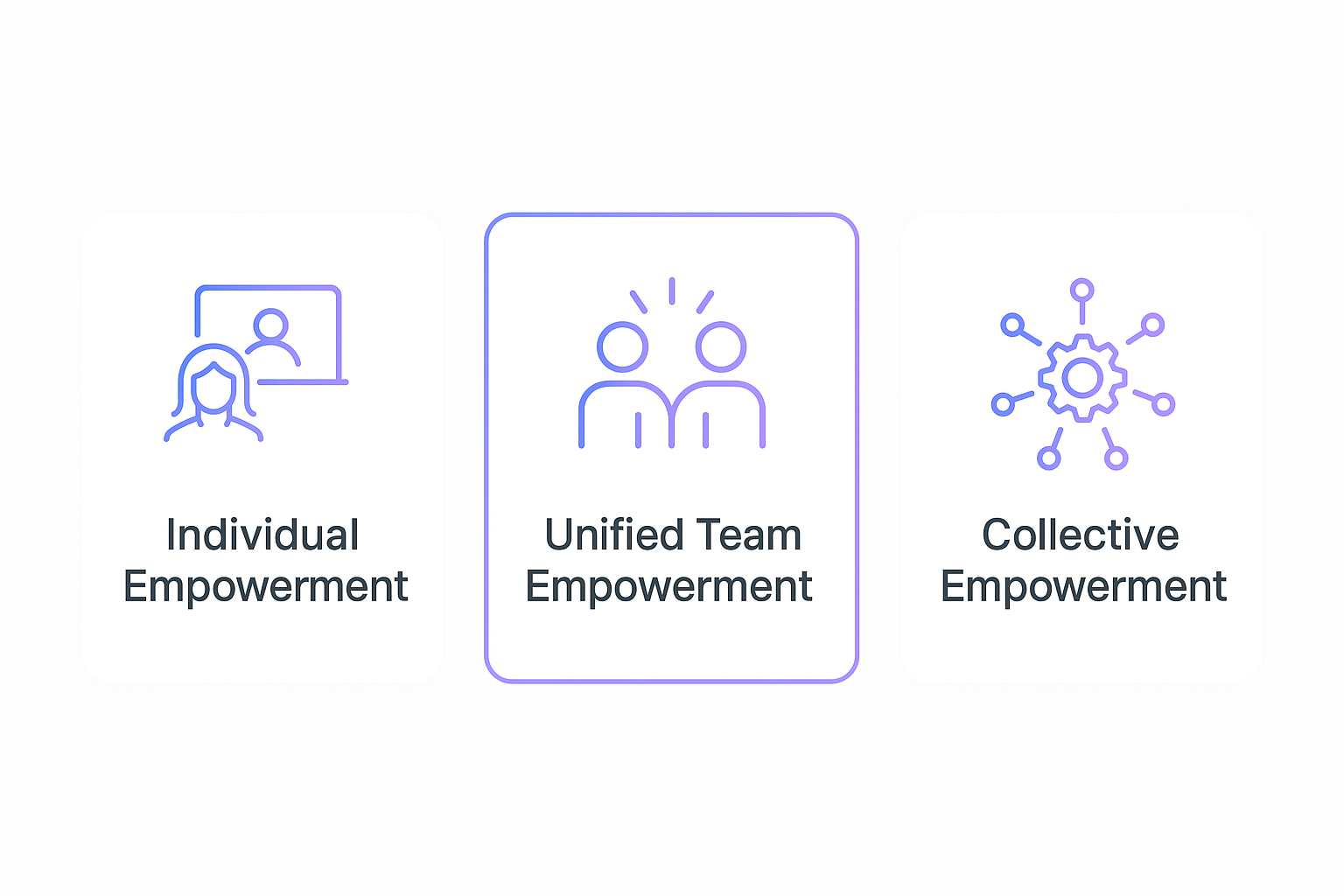
Recognize that each team member has unique skills and motivations. Set both individual and collective goals that challenge and inspire them.
Empowerment strategies:
- Assign leadership roles in projects or meetings
- Make introductions between team members and clients
- Include everyone in relevant communications
- Actively seek and value feedback from all team members
- Involve the team in planning and problem-solving
- Express genuine gratitude for their contributions
8. Enhance your skills for managing a remote team
Remote management requires different approaches than traditional office settings. Bridge the physical gap to maintain strong team connections.
Remote management essentials:
- Use digital tools that keep everyone synchronized
- Communicate clearly and frequently with detailed information
- Promote video calls for both work discussions and social connections
- Schedule regular group meetings and one-on-one check-ins
- Use project management software to track tasks and progress
9. Adopt new leadership styles

Effective management means adapting your approach to meet different situations and team needs.
If you naturally lean toward directive leadership, try incorporating more consultative or collaborative methods when appropriate. This flexibility helps you connect with your team more meaningfully and tailor your guidance to specific circumstances.
10. Set up a defined leadership hierarchy
A transparent leadership structure eliminates confusion and saves time. Everyone should know who their direct leaders are and whom to approach with questions.
Implementation plan:
- Create an organizational chart showing the hierarchy
- Include it in your employee handbook
- Update it as your team grows or changes
- Make it easily accessible to all team members
11. Organize team bonding activities

It's important for your team to feel connected, not just during work hours but outside as well. They don't need to become best buddies, but organizing activities such as volunteer work, a casual happy hour, or a fun evening of laser tag can significantly enhance the sense of camaraderie among team members.
These activities allow everyone to interact in more relaxed, real situations, which can make future communication and collaboration at work smoother and more natural.
12. Make the most of project management tools

Stay organized by properly managing tasks, schedules, and team member information. Project management software helps you distribute tasks, align responsibilities, track deadlines, and ensure nothing falls through the cracks.
The best AI project management tools help you keep every member of the team on the same page.
13. Display emotional intelligence in leadership
Emotional intelligence, one of the human relations skills every project manager must possess, means understanding and responding to the emotions of others. Show your team that their well-being matters to you.
Practice emotional intelligence by:
- Observing shifts in team members' behavior
- Asking sincere questions about how they're feeling
- Offering thoughtful, considerate responses
- Creating a supportive and understanding environment
14. Admit your mistakes
Everyone makes mistakes, including managers. It's important to acknowledge when you've made an error, big or small, to show you're human and approachable. When you share your mistakes, be sure to also share what you've learned from them.
This practice of self-reflection sets a positive example for your team, encouraging them to take responsibility for their own mistakes and fostering a culture of continuous improvement.
15. Handle conflicts with tact

Navigate workplace conflicts by staying neutral and facilitating constructive resolution.
Conflict resolution approach:
- Don't take sides in disputes
- Invite the involved parties to a private meeting
- Let everyone express their concerns openly
- Keep the conversation constructive
- Guide the discussion toward a mutually satisfactory resolution
- Address conflicts early before they escalate
👉 Take It a Step Further: For significant conflicts, it's wise to document the process. Knowing how to write a report on conflict resolution ensures the agreement is clear to everyone and provides a valuable reference for improving team dynamics in the future.
Lead your team to victory with Dart
A happy, aligned team is a force to be reckoned with. But we know that how to handle a team in real-world situations is often more challenging than the management theories suggest.
This is why we created Dart: to take the administrative weight off your shoulders. It frees you up to focus on what truly matters: leading your people.
So, take these effective team management strategies, pair them with a tool that has your back, and watch the magic happen.
_light%201.avif)