.jpg)
Did you know that Albert Einstein once said, “We cannot solve our problems with the same thinking we used when we created them”? This quote perfectly highlights the need for both creative and critical thinking when tackling life’s most challenging problems.
Critical and creative thinking enables innovative yet practical problem-solving by blending imagination with logical evaluation. It helps break conventional patterns, explore new ideas, and refine them into effective solutions.
In a constantly changing environment, combining structured reasoning with creativity leads to smarter strategies and stronger results.
5 strategies to master critical thinking
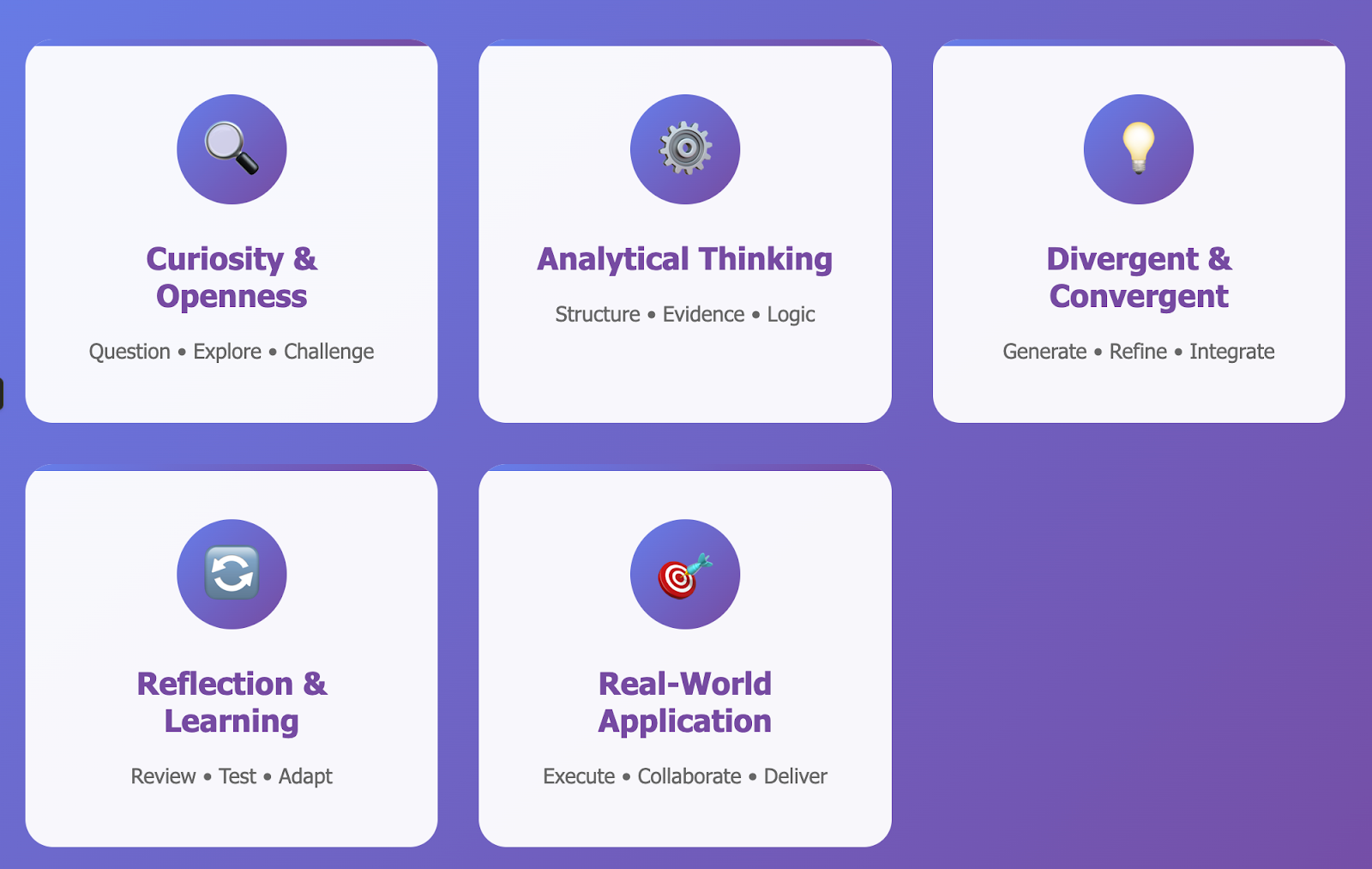
Developing creative thinking and problem-solving abilities requires deliberate effort and balanced mental flexibility, especially for collaborative work. The following steps highlight how to nurture both imagination and logic for more effective, innovative outcomes.
1. Cultivate curiosity and openness
Great ideas begin with curiosity, the drive to ask questions and explore the unknown. Openness allows you to challenge assumptions and approach problems from fresh perspectives, creating space for innovation to thrive.
- Question assumptions to uncover new opportunities.
- Seek diverse insights from multiple sources and disciplines.
- Use structured brainstorming to encourage unexpected ideas.
- Embrace experimentation even when outcomes are uncertain.
2. Strengthen analytical thinking
Critical analysis provides structure and clarity to creative ideas, transforming abstract thoughts into actionable solutions. Strengthening your analytical mindset helps ensure every decision rests on solid reasoning.
- Break challenges into smaller, manageable components.
- Apply pros and cons evaluation models for fact-based decisions.
- Identify and minimize personal biases that cloud judgment.
- Rely on data and evidence before finalizing conclusions.
3. Practice divergent and convergent thinking
Balancing open-ended exploration with structured analysis is key to effective innovation. Divergent thinking encourages idea generation, while convergent thinking refines those ideas into practical strategies.
- Encourage new perspectives through divergent thinking approaches.
- Narrow options logically to identify feasible solutions.
- Alternate between creative brainstorming and focused reasoning.
- Integrate AI-based insights to enhance decision accuracy.
4. Embrace reflection and continuous learning
Reflection transforms experience into growth, enabling you to refine how you think and solve problems over time. Continuous learning ensures that both critical thinking and creativity evolve with changing needs and technologies.
- Review project outcomes and identify lessons learned.
- Test innovative approaches using AI-driven proof of concept models.
- Explore tools that enhance competitiveness and productivity through technology-enabled systems.
- Stay informed and adaptable to maintain long-term problem-solving agility.
5. Apply skills to real-world challenges
Practical application is the ultimate test of solving problems. Using these skills in real-world contexts fosters confidence and measurable progress.
- Collaborate on marketing initiatives enhanced by AI-powered strategy platforms.
- Engage in complex projects that combine logic with innovation.
- Streamline workflows through modern AI project management tools.
- Execute solutions that balance originality with long-term effectiveness.
Theoretical techniques that strengthen creative and critical thinking
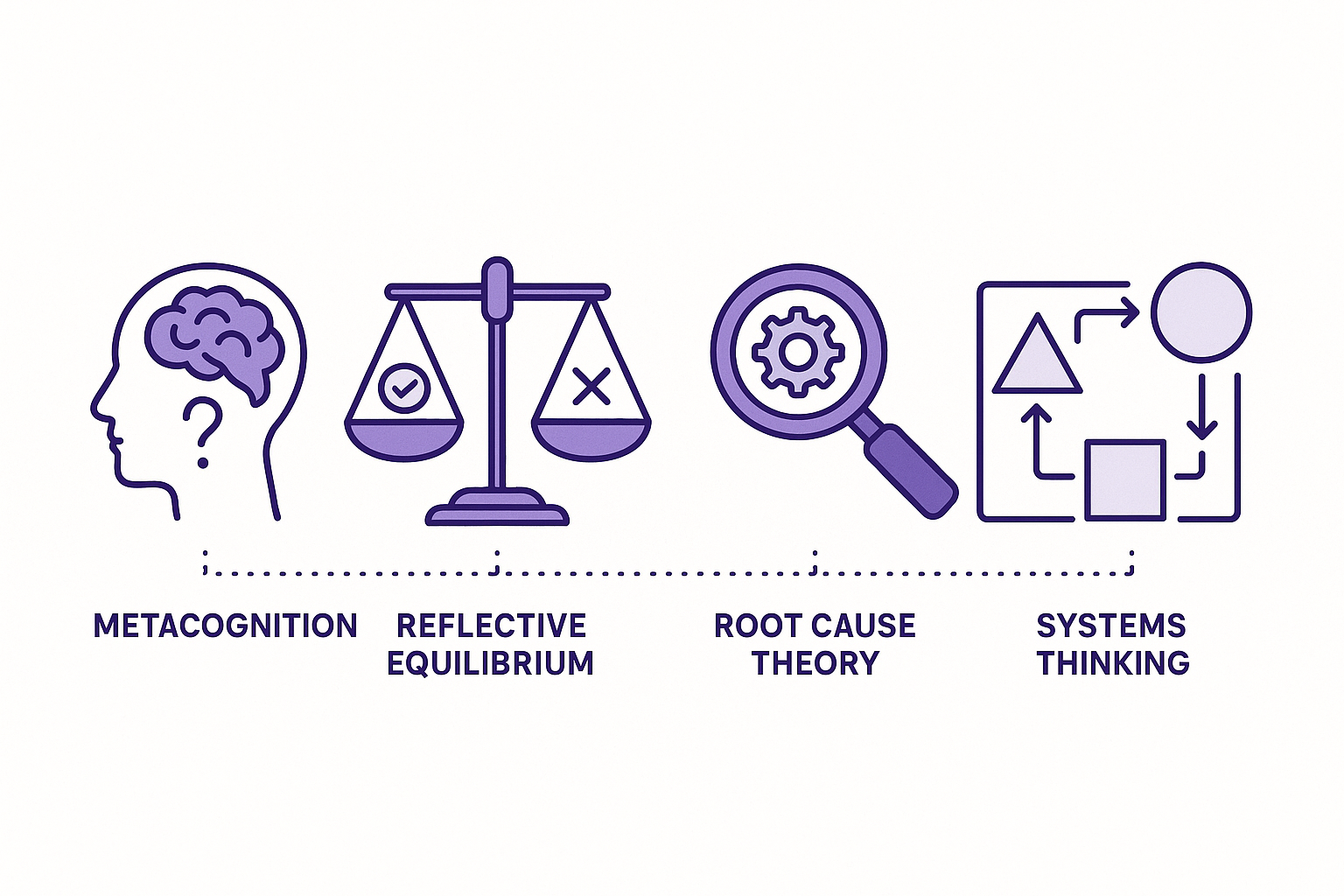
To truly think like problem-solvers who see beyond the obvious, one must understand the theoretical foundations that shape both creative and critical thinking.
These frameworks help refine reasoning, stimulate imagination, and build the intellectual discipline needed to handle complex challenges effectively.
1. Metacognition: Thinking about your thinking
Metacognition is the process of analyzing how you think and learn. It allows individuals to monitor, evaluate, and adjust their cognitive strategies to achieve better results.
- Question your assumptions before jumping to conclusions.
- Reflect on past decisions to identify recurring thought patterns.
- Set deliberate thinking goals.
By becoming aware of your own thought process, you improve how you approach and manage new problems, ensuring your reasoning stays balanced and purposeful.
2. Reflective equilibrium: Achieving balanced judgments
Proposed by philosopher John Rawls, this method encourages aligning beliefs, principles, and outcomes through reflection and adjustment. It’s a sophisticated form of solving problems critically and creatively that seeks internal consistency.
- Start by examining your initial intuitions or opinions about a problem.
- Compare them against factual evidence or established frameworks.
- Revise your stance until your reasoning feels coherent and justified.
This iterative process ensures that ideas are not only imaginative but also ethically and logically sound.
3. Root cause theory and analytical reasoning
The Root Cause Analysis (RCA) framework emphasizes looking beyond symptoms to identify the true origin of problems. It’s a cornerstone of critical thinking and structured inquiry.
- Begin by clearly defining the observed issue.
- Ask successive “why” questions to uncover underlying factors.
- Evaluate data objectively before recommending solutions.
Modern advancements, such as AI-assisted root cause analysis, now enhance this process by detecting complex patterns humans might miss.
This integration of logic and technology demonstrates how creativity and critical thinking evolve together in modern problem-solving environments.
4. Systems thinking: Seeing the bigger picture
Systems thinking encourages individuals to perceive problems as part of larger interconnected systems rather than isolated events. It cultivates strategic awareness, essential for leaders, innovators, and analysts alike.
- Map relationships between causes, effects, and feedback loops.
- Identify leverage points where small changes create a significant impact.
- Anticipate unintended consequences before implementing solutions.
By applying systems thinking, you develop a mindset that merges analytical depth with holistic creativity, allowing you to anticipate outcomes and adapt intelligently.
Industry-specific applications of creative and critical thinking
While these are universal skills, their application can vary significantly across different sectors. Let's explore how these cognitive approaches are leveraged in various industries, along with illustrative case studies that demonstrate their impact.
Healthcare: Innovating patient care
In the healthcare sector, the combination of creative thinking and critical thinking is literally saving lives. Medical professionals must constantly balance innovative treatments with evidence-based practices.
Key applications:
These approaches help healthcare teams innovate responsibly while improving patient outcomes.
- Developing new treatment protocols
- Improving patient care processes
- Solving complex diagnostic challenges
Case study: The da Vinci Surgical System
The da Vinci Surgical System exemplifies the fusion of creative thinking and critical thinking in healthcare. This robotic surgery assistant allows doctors to perform complex procedures with enhanced precision and control.
- Creative Thinking: Imagining a robotic system that could enhance a surgeon's capabilities.
- Critical Thinking: Rigorously testing and refining the system to ensure patient safety and improved outcomes.
The result? Minimally invasive surgeries with faster recovery times and reduced complications.
Technology: Pushing the boundaries of innovation
The tech industry is perhaps the poster child for critical thinking, where disruptive innovations are born through a delicate balance of imaginative leaps and rigorous analysis.
Key applications:
Tech professionals use these skills to create impactful, efficient, and future-ready innovations.
- Developing new products and services
- Solving complex coding and engineering challenges
- Predicting and shaping future tech trends
Case study: SpaceX’s reusable rockets
SpaceX's development of reusable rockets showcases how both thinking can revolutionize an entire industry.
- Creative Thinking: Envisioning a rocket that could land itself and be reused, dramatically reducing space travel costs.
- Critical Thinking: Meticulously analyzing each test flight, iterating designs, and optimizing performance through data-driven decisions.
The outcome? A paradigm shift in space exploration and satellite deployment.
Education: Shaping the minds of tomorrow
In education, these are not just tools, but essential skills to be imparted. Educators must employ these cognitive approaches to develop effective teaching methods and curricula.
Key applications:
These methods help educators design meaningful lessons and encourage lifelong learning.
- Designing engaging and effective learning experiences
- Adapting teaching methods to diverse learning styles
- Assessing and improving educational outcomes
Case study: Finland’s educational reform
Finland's transformation of its education system is a testament to the power of creative and critical thinking in policy-making.
- Creative Thinking: Reimagining education with a focus on holistic development, less standardized testing, and more teacher autonomy.
- Critical Thinking: Carefully analyzing educational outcomes, teacher performance, and student well-being to refine the approach.
The result? Finland consistently ranks among the top global education systems, producing well-rounded, critical-thinking graduates.
Finance: Navigating complex markets
In the world of finance, these are essential for managing risk and identifying opportunities in an ever-changing global economy.
Key applications:
Professionals apply these abilities to innovate responsibly while maintaining stability and compliance.
- Developing new financial products
- Analyzing market trends and making predictions
- Creating robust risk management strategies
Case study: The rise of algorithmic trading
The development of algorithmic trading systems showcases the intersection of creative and critical thinking in finance.
- Creative Thinking: Conceiving complex algorithms that can analyze vast amounts of data and execute trades in milliseconds.
- Critical Thinking: Rigorously testing these algorithms, analyzing their performance, and continuously refining them to adapt to market changes.
The impact? A transformation in how financial markets operate, with increased liquidity and efficiency.
Environmental science: Tackling global challenges

In environmental science, these are crucial for developing sustainable solutions to pressing global issues.
Key applications:
These approaches foster innovation while ensuring environmental and scientific integrity.
- Innovating clean energy technologies
- Designing effective conservation strategies
- Modeling complex environmental systems
Case study: The Ocean Cleanup Project
The Ocean Cleanup project, aimed at removing plastic waste from the world's oceans, exemplifies creative and critical thinking in environmental problem-solving.
- Creative Thinking: Designing a passive system that uses ocean currents to concentrate and collect plastic debris.
- Critical Thinking: Conducting extensive feasibility studies, scale model tests, and iterative design improvements based on real-world data.
The result? A promising large-scale solution to one of our most pressing environmental challenges.
These industry-specific applications and case studies demonstrate the versatility and power of creative and critical thinking across diverse sectors.
By studying these examples, we can gain insights into how to apply these cognitive skills more effectively in our own fields, driving innovation and solving complex problems.
How do creative & critical thinking work together?

Understanding how they work together is key to solving problems effectively. Creativity opens new pathways, generating ideas and possibilities, while critical thinking brings focus and discernment, testing those ideas for practicality and coherence.
Let’s explore how this balance functions in real-world problem-solving.
1. The complementary nature of two thinking modes
Creative and critical thinking are not opposites; they’re partners. Creativity thrives on imagination, openness, and exploration. Critical thinking thrives on structure, analysis, and logic.
When applied together, they allow for divergent idea generation followed by convergent evaluation, ensuring ideas are both original and actionable.
2. The cycle of ideation and evaluation
Problem-solving is rarely linear. Ideas often evolve through cycles of creativity and critique, first generating possibilities, then testing and refining them.
- Creative phase: Brainstorm freely without judgment.
- Critical phase: Analyze, filter, and select what’s viable.
This back-and-forth loop transforms vague concepts into practical strategies, giving ideas both vision and direction.
3. Collaboration and cognitive diversity
Groups that combine different thinking styles often produce the strongest results. Creative thinkers expand horizons, while critical thinkers structure the conversation.
When collaboration values both, teams can uncover hidden insights and translate them into well-defined, realistic solutions. This balance prevents over-analysis from stalling creativity and ensures innovation stays grounded.
Develop holistic solutions by blending creativity and critical analysis
Effective problem-solving requires balancing creativity and critical analysis. Creative thinking sparks fresh ideas, while critical thinking refines them into actionable solutions.
Together, they create a flexible and holistic approach to tackling challenges. Embrace this balance to generate innovative outcomes and make smarter decisions in any situation.
_light%201.avif)