%20(2).jpg)
Ever watched a project budget spiral out of control? Businesses waste nearly a third of their budgets on inefficiencies, poor resource allocation, and those dreaded unexpected expenses.
Even with meticulous planning, projects have a way of going off the rails. Costs increase, deadlines slip, and suddenly you're explaining another overrun to stakeholders. But what if you could actually get ahead of these problems?
This is the promise of cost reduction by using AI in project management - a transformative approach that gives teams the predictive power to optimize resources and control spending proactively.
5 powerful ways AI drives cost reduction in project management
Every organization is looking for ways to cut costs without sacrificing quality or missing deadlines, but traditional approaches only get you so far.
Standardized project management planning create the foundation, then AI amplifies their value.
Let's look at how these technologies are actually changing the game for project expense management.
1. Predictive analytics: Spotting budget risks
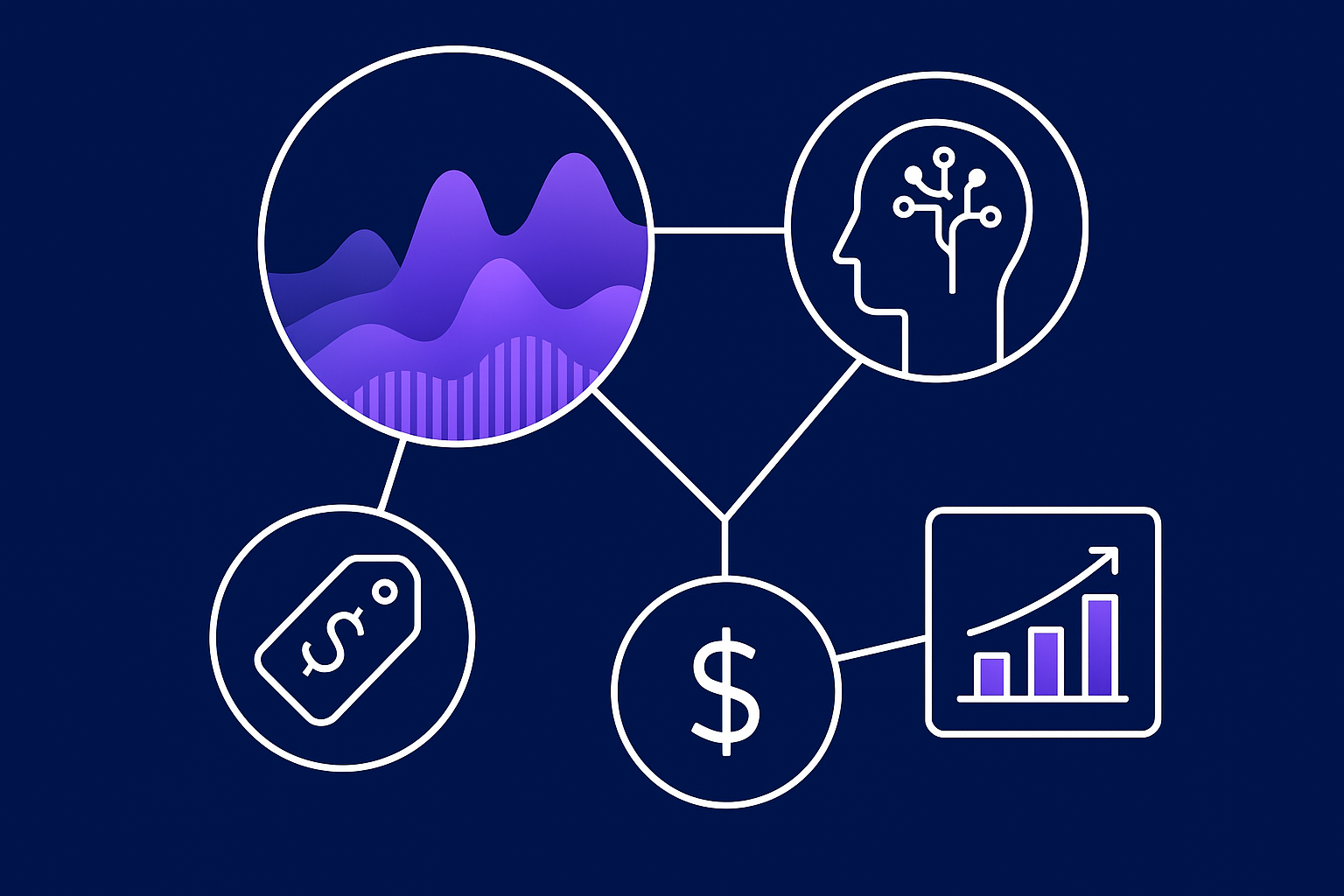
Here's what makes AI different: it can analyze your project's financial trajectory and flag risks before they drain your budget. Traditional project management relies on historical data and gut feelings, which means you're often reacting to issues instead of preventing them.
Predictive analytics delivers artificial intelligence savings in project management by:
- Analyzing past project data to uncover cost patterns
- Monitoring real-time financial metrics to spot budget drift
- Creating probability-based forecasts to quantify financial risks
- Recommending budget adjustments to keep spending on track
Example: An AI system might notice that projects using certain vendors in specific phases consistently run 15-20% over budget. Armed with that insight, you can renegotiate terms or find alternatives before the overrun happens, not after.
2. Process automation: Eliminating labor costs for repetitive tasks
Let's be honest: manual, repetitive work eats up way too much of your team's time. Data entry, report generation, documentation updates... these tasks add up fast, especially on admin-heavy projects.
AI automation changes the equation by:
- Taking over routine administrative work
- Managing scheduling and resource adjustments in real time
- Streamlining approval workflows with intelligent routing
- Running key processes 24/7 without extra headcount
The impact: Organizations using AI automation for project management tasks typically see labor cost reductions of 30-50% for affected processes. Even better? Accuracy and consistency improve at the same time.
3. Resource optimization: Making every dollar work harder
Poor resource allocation is a major budget killer, whether it’s idle assets, overstaffed phases, or the wrong people on the wrong tasks due to scheduling conflicts.
AI transforms this with:
- Dynamic allocation models that adjust resources as conditions change
- Skill-matching that assigns the right people to tasks
- Just-in-time provisioning that reduces idle waste
- Scenario simulation to test configurations upfront
The result? Every resource gets used at optimal capacity - nothing more, nothing less. Many businesses report improvements in resource efficiency after implementing AI optimization tools, and those savings go straight to the bottom line.
4. Error reduction: Catching quality issues before they happen
Small errors in complex projects can spark a costly chain reaction, whether it’s a blueprint miscalculation, a coding flaw in production, or a procurement order with wrong specs, leading to rework and delays.
AI-driven quality control systems catch these issues by:
- Continuously scanning deliverables against standards
- Using pattern recognition to spot inconsistencies
- Identifying anomalies in code, designs, or documentation early
- Cross-referencing outputs to detect conflicts upfront
The payoff is double: You avoid direct rework costs and keep projects on schedule, which maintains stakeholder confidence. AI quality control typically reduces error rates by 40-60% on critical deliverables.
5. Dynamic pricing and cost analysis: Finding hidden savings opportunities
Beyond day-to-day project work, AI excels at uncovering savings that would otherwise stay hidden. Traditional cost analysis just doesn't have the horsepower to spot subtle patterns across complex financial data.
AI-powered financial tools change that through:
- Vendor analysis to find negotiation opportunities
- Price benchmarking across similar products and services
- Spending pattern detection to flag unnecessary costs
- Scenario modeling to test strategies before committing
The opportunity: Many organizations discover 10-20% cost reduction opportunities on major procurement categories after implementing AI financial analysis.
Tailored AI implementation: Cost solutions for every project
Here's the thing about AI cost reduction - there's no universal plan. What works for a $50 million construction project won't make sense for a $200K marketing campaign.
AI isn’t replacing project managers but enabling them to make smarter, cost-efficient decisions across projects of all sizes.
Your industry, project scope, and organizational maturity all matter. Let's break down how to match AI solutions to your specific situation so you get maximum value without unnecessary complexity or expense.
Small vs. large projects: Finding your perfect AI match
The scale of your project fundamentally changes which AI solutions deliver the best ROI.
But can AI software solutions help cut costs in enterprise AI projects? Absolutely, but the approach differs significantly based on project scale. Let's examine the critical differences:
Small to medium projects (under $500K)
For smaller projects, lightweight and focused implementations work best.
You'll want:
- Ready-to-use SaaS solutions with minimal configuration
- Process-specific automation for high-frequency tasks
- Template-based predictive models that don't need customization
- Simple pricing that keeps upfront costs low
Large enterprise projects ($1M+)
Major initiatives benefit from comprehensive enterprise AI tools for cost reduction that integrate across multiple workflows.
These projects can justify:
- Custom-trained models using your organization's historical data
- End-to-end automation across multiple workflows
- Advanced predictive systems that model complex interdependencies
- Investment in specialized AI talent for implementation and optimization
Industry-specific applications: Maximizing relevance and impact
While some AI strategies work everywhere, industry-specific implementations often deliver the best results because they address your unique challenges.
Construction industry
Construction faces distinct issues: material waste, equipment utilization, and weather delays.

High-impact AI applications include:
- BIM-integrated predictive maintenance for heavy equipment
- Computer vision for monitoring site safety and progress
- Material usage optimization that reduces waste
- Weather-adaptive scheduling that minimizes downtime
Results: Leading construction teams have achieved substantial reductions through these targeted implementations, with some reporting savings that significantly exceed industry averages.
Software development projects
Software projects benefit from AI focused on code quality and development efficiency.
Key applications:
- AI-assisted code completion and review
- Automated testing that catches issues earlier
- User story estimation for better budget forecasting
- Intelligent resource allocation across sprints
Results: Technology companies adopting these solutions frequently see dramatic improvements in both development costs and software quality metrics.
Manufacturing operations
AI for manufacturing impacts production efficiency, quality control, and supply chain management.
Key applications:
- Predictive maintenance that minimizes downtime
- Computer vision quality control that reduces defects
- Supply chain optimization that lowers inventory costs
- Energy usage optimization that cuts operational expenses
Results: Manufacturers often report substantial overall project cost reductions alongside improvements in product quality and delivery reliability.
Professional services
Service-based projects use AI for resource utilization and client satisfaction.
Key applications:
- AI-powered staff allocation for billable hour efficiency
- Sentiment analysis for early detection of issues
- Automated documentation that reduces overhead
- Knowledge management that leverages past project learnings
Results: Professional service firms typically achieve meaningful margin improvements on client engagements while enhancing service delivery.
Scaling considerations: Matching solutions to organizational maturity

Your organization's AI experience matters just as much as project size or industry.
Stage 1: AI beginners
If you're taking your first steps, focus on proven, low-risk applications.
Prioritize:
- Low-risk applications with proven track records
- Managed services or SaaS requiring minimal expertise
- Focused implementations addressing specific pain points
- Clear success metrics to build confidence
Stage 2: AI-competent organizations
With some experience, you can progress to more sophisticated implementations.
Focus on:
- Cross-functional implementations spanning multiple areas
- Integration of multiple solutions through a cohesive strategy
- Development of internal capabilities alongside vendor solutions
- Sophisticated ROI calculations capturing indirect benefits
💡Need help maximizing project ROI? This value realization template can help.
Stage 3: AI-advanced enterprises
Firms with sophisticated capabilities can pursue transformative solutions.
Pursue:
- Custom solutions tailored to unique processes
- Enterprise-wide strategies that transform project delivery
- AI centers of excellence are developing proprietary approaches
- Continuous innovation cycles pushing boundaries
Transforming costs with AI: A real-world success story
Theory is great, but nothing beats seeing actual results. Let's look at how NIB, an Australian health insurer, used AI to achieve operational efficiency and substantial cost savings.
NIB's journey: From traditional operations to AI-driven efficiency
NIB is a prominent health insurer based in Newcastle, Australia, serving over a million members with health and medical insurance products.
The challenge: Facing rising operational costs and pressure to enhance customer service efficiency, NIB needed innovative solutions to stay competitive without compromising service quality.
AI implementation strategy: NIB introduced Nibby, an AI-driven digital assistant designed to handle customer inquiries and support services. This virtual assistant is integrated into their customer service framework to automate routine tasks and provide immediate responses to common queries.
Implementation timeline:
- Months 1-3 (Planning and development): Identified repetitive tasks suitable for automation and developed the AI assistant tailored to NIB's customer service needs.
- Months 4-5 (Pilot testing): Deployed Nibby in a controlled environment to handle specific interactions, monitor performance, and gather feedback.
- Month 6 (Full deployment): Integrated Nibby across all customer service channels, enabling 24/7 support and automating a significant portion of interactions.
Challenges encountered and solutions:
- Employee pushback: Initial resistance from staff concerned about job security was addressed by involving employees in the integration process and highlighting how Nibby would handle routine tasks, freeing staff for complex issues.
- Customer adaptation: Ensured smooth user experience by designing Nibby to interact naturally, with clear options to speak with human agents when necessary.
Before and after metrics
- Operational costs: Achieved a $22 million reduction in operational costs post-implementation.
- Customer service efficiency: Reduced the need for human customer service support by 60% and decreased phone calls with agents by 15%.
Lessons learned
- Employee engagement: Involving staff early in AI adoption mitigates resistance and promotes collaboration.
- Customer-centric design: Ensuring the AI provides value without hindering the experience is crucial for acceptance.
- Continuous improvement: Regularly updating the system based on feedback ensures it evolves with changing needs.
Transform your cost management strategy with AI solutions
Project expenses don't have to spiral out of control. With AI for business cost savings, AI savings in project management deliver measurable results across industries and project sizes.
Want to cut costs without compromising efficiency? Try an AI tool for project management to automate workflows, improve forecasting, and streamline project budgets. Start optimizing today!
_light%201.avif)