.jpg)
Understanding the impact and importance of scope creep is vital for any team aiming to deliver consistent project results. What starts as small, seemingly harmless changes can quickly evolve into major disruptions that shake timelines, inflate budgets, and drain team morale.
This section explores the true consequences of uncontrolled scope expansion and how it affects every layer of project performance, from productivity to profitability.
The real impact of scope creep on project success: 7 impacts to be considered
How does scope creep undermine a project’s success? When scope drifts beyond its original plan, it disrupts even the most organized project management process. These unmanaged changes can derail timelines, strain resources, and blur priorities, challenges Dart AI helps teams predict and prevent.
1. Timeline instability and scheduling breakdown
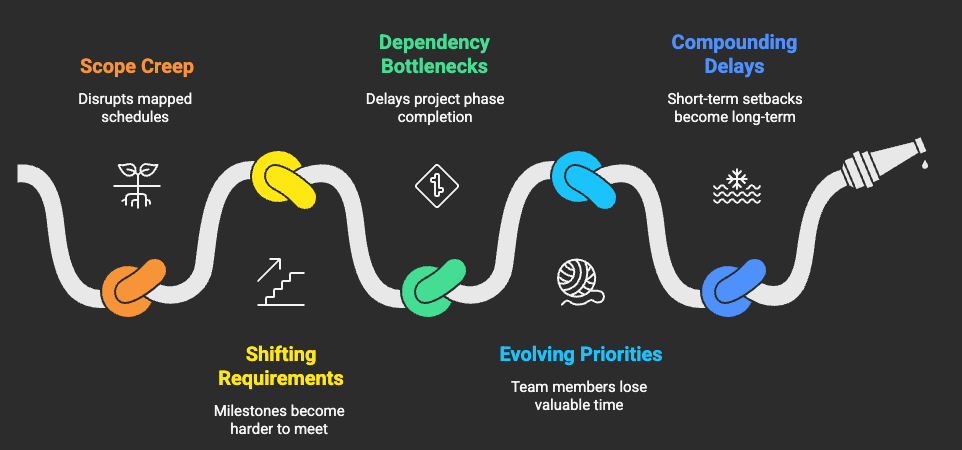
Scope creep often disrupts carefully mapped schedules, making it difficult for teams to stay on course. As new features or requirements sneak in, time allocations and dependencies begin to collapse.
- Project milestones become harder to meet due to shifting requirements.
- Dependencies between phases create bottlenecks that delay completion.
- Team members lose valuable time juggling evolving priorities.
- Each delay compounds, turning short-term setbacks into long-term schedule overruns.
The result is a snowball effect, where even minor additions can push delivery dates months beyond the original plan.
2. Escalating costs and budget overruns
The financial ramifications of unchecked changes can be severe. Each added task introduces hidden expenses that slowly erode profit margins.
- Labor hours increase as teams rework deliverables.
- Materials, tools, or licenses multiply with new requirements.
- Overhead costs rise with longer project durations.
- Clients face unexpected invoices or scope-related disputes.
Even a modest change can lead to exponential cost growth once resource strain and reallocation are factored in.
3. Resource fatigue and team burnout
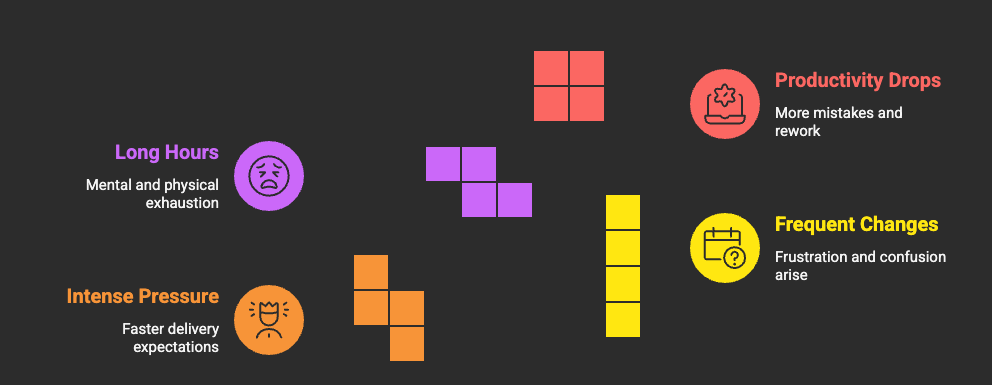
When workloads surge but resources stay fixed, burnout becomes inevitable. Team morale dips as members stretch beyond capacity.
- Employees face intense pressure to deliver faster.
- Frequent changes lead to frustration and confusion.
- Long hours contribute to mental and physical exhaustion.
- Productivity drops, resulting in more mistakes and rework.
Unchecked, this exhaustion cycle can dismantle team efficiency and jeopardize overall project quality.
4. Declining quality and compromised standards
As teams scramble to keep up, quality control becomes a casualty. What was once a well-tested product may end up riddled with flaws.
- Testing phases are shortened or skipped entirely.
- Teams cut corners to meet delivery dates.
- Documentation and maintenance tasks are neglected.
- Long-term functionality suffers from rushed implementation.
Ultimately, customers experience subpar results, damaging both satisfaction and brand credibility.
5. Damaged stakeholder trust and alignment
Scope creep doesn’t just strain operations; it also weakens relationships. Stakeholders lose confidence when outcomes drift from expectations.
- Clients question reliability and project transparency.
- Managers impose tighter oversight, causing tension.
- Misaligned goals create unnecessary conflict.
- Stakeholders become resistant to future initiatives.
Rebuilding trust takes time, and repeated scope issues can harm long-term partnerships or funding opportunities.
6. Reduced ROI and long-term profitability loss
At the end of every project, results are measured in returns, and scope creep consistently undermines them.
- Costs increase without proportional value gains.
- Delays postpone revenue realization or market entry.
- Ongoing maintenance inflates operational expenses.
- Competitive advantage is lost due to slow delivery.
Studies show that an unmanaged scope can slash ROI by more than half, significantly diminishing business performance.
7. Strategic misalignment and missed opportunities
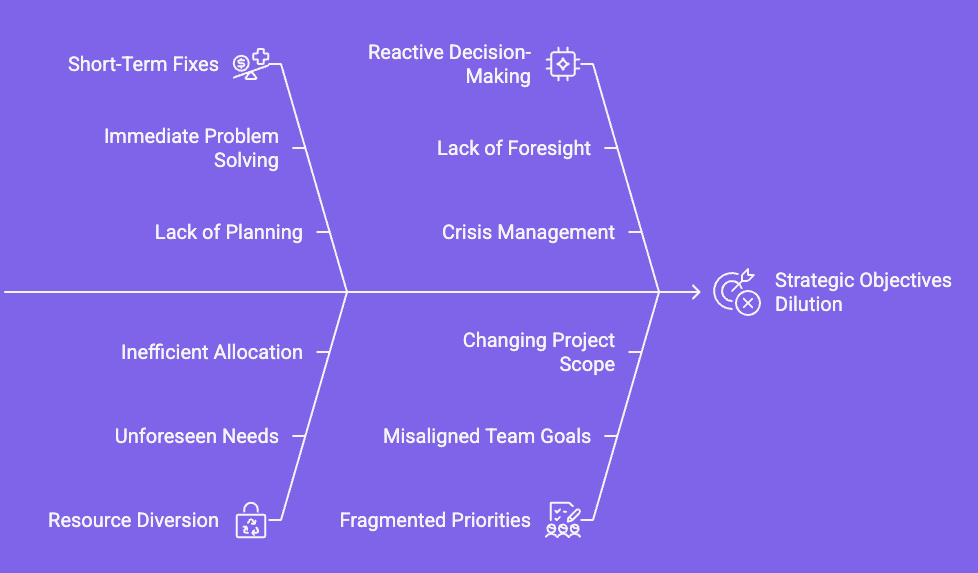
Beyond finances and timelines, one of the most subtle yet damaging effects lies in misaligned objectives. When teams chase shifting goals, the overall vision becomes blurred.
- Short-term fixes overshadow strategic objectives.
- Resource diversion pulls focus from high-value initiatives.
- Long-term goals lose traction due to reactive decision-making.
- The project’s original purpose is diluted by fragmented priorities.
Strategic clarity ensures that every decision supports broader business outcomes, something scope creep directly undermines.
Scope expansion traps: How to spot and stop them
To understand how scope creep undermines the success of a project, you need to recognize its early signs. Small, unchecked changes can quietly expand scope, stretch resources, and delay delivery. Spotting these traps early helps keep your projects focused and under control.
Inadequate initial requirements gathering
Many project issues start with incomplete or unclear requirements. If objectives and deliverables are not defined thoroughly at the outset, gaps and ambiguities will emerge as the project progresses.
These gaps invite changes and additions, creating a snowball effect that disrupts timelines and budgets.
Solution: Dedicate time to detailed requirements gathering. Collaborate with all stakeholders to identify needs, constraints, and potential risks before the project kicks off.
Lack of stakeholder alignment and communication

Misaligned expectations between stakeholders and the project team often lead to frequent changes.
When stakeholders are not on the same page, conflicting priorities arise, forcing the team to accommodate new requests. This lack of coordination can create a cycle of modifications that derail progress.
Solution: Foster open and regular communication with stakeholders. Use tools like a project charter and routine update meetings to ensure everyone shares a common understanding of project goals.
Poor project management practices
Projects without strong leadership and oversight are vulnerable to unexpected changes. Weak planning, undefined roles, and an absence of accountability create an environment where unapproved changes can slip through unnoticed.
Solution: Assign a capable project manager to oversee operations. Use structured methodologies like Agile or Waterfall to maintain clear processes and responsibilities.
Absence of a formal change management process
When there’s no structured approach to handle changes, every request feels urgent and necessary. Teams often implement adjustments on an ad-hoc basis, leading to chaos and resource mismanagement.
Solution: Implement a formal change management process. Use a system to assess the impact of changes on timelines, budgets, and quality before approving them.
Over-promising or unclear deliverables
In an effort to please stakeholders, teams sometimes commit to unrealistic goals or vague deliverables. This creates a situation where expectations grow during the project, forcing teams to overextend themselves.
Solution: Set realistic expectations with stakeholders from the start. Clearly define what is included and excluded, documenting everything in a project agreement or contract.
Project disruptions don’t happen by chance; they stem from preventable mistakes. By addressing these common causes with proactive strategies, teams can avoid unnecessary setbacks and deliver successful outcomes.
Lessons from the field: Real-world insights on managing scope challenges
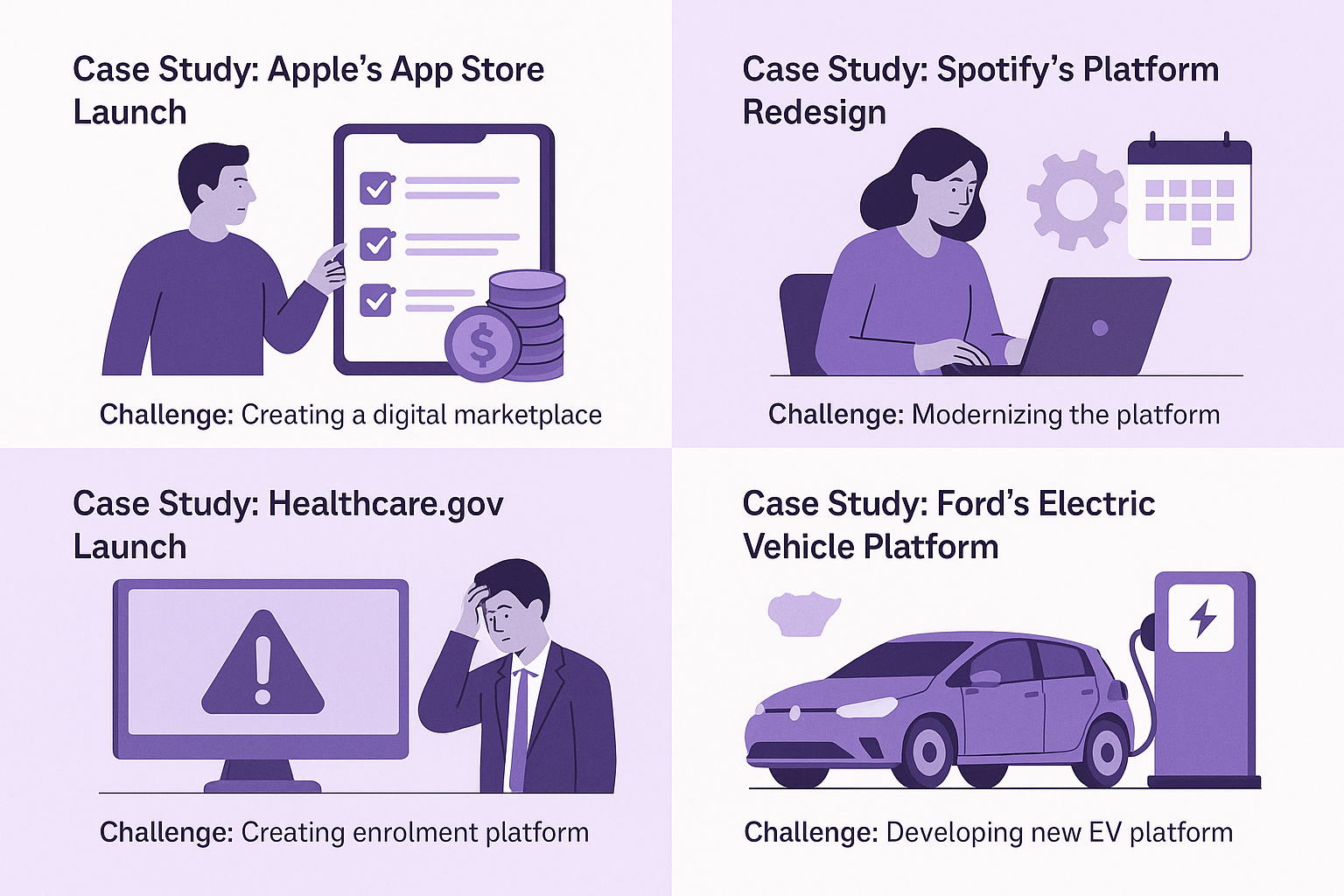
Real-world examples of project success and failure offer invaluable lessons for understanding and addressing scope issues. These project scope creep examples highlight both the pitfalls of unmanaged changes and the strategies that lead to successful outcomes.
Let’s explore inspiring success stories, cautionary tales, and industry-specific challenges backed by research and data.
Success stories of scope management
These real-world examples showcase how strong scope management prevents scope creep, optimizes resources, and ensures projects are delivered on time and within budget.
Case study: Apple's app store launch (2008)
Apple’s journey to create a first-of-its-kind digital marketplace shows how focusing on core features can turn a visionary idea into a commercial triumph.
- Challenge: Creating a revolutionary digital marketplace while facing pressure for numerous feature additions
- Solution: Implemented strict scope controls focusing only on core functionalities: downloads, payments, and reviews
- Outcome: Launched successfully within 6 months, generated $30 million in the first month, and became an industry standard
Key Takeaway: Focusing on core features and resisting feature bloat leads to successful project delivery
Case study: Spotify's platform redesign (2015)
Spotify’s redesign story demonstrates how agile methodology and structured scope boundaries can balance innovation with stability, even on a tight schedule.
- Challenge: Modernizing the platform while maintaining user experience and meeting tight deadlines
- Solution: Adopted two-week sprint cycles with strict feature boundaries and clear prioritization
- Outcome: Achieved a 15% increase in user engagement with zero major bugs and on-time delivery
Key Takeaway: Agile methodology combined with strong scope control enables successful platform updates
Learning from project failures
Project failures often offer invaluable lessons about what can go wrong when planning and execution lose focus. The following case studies highlight how scope creep and uncontrolled expansion can derail even the most well-funded initiatives.
Case study: Healthcare.gov launch (2013)
The Healthcare.gov rollout highlights how excessive scope changes without proper oversight can overwhelm resources and derail critical timelines.
- Challenge: Creating a nationwide healthcare enrolment platform
- Solution Attempted: Expanding scope to accommodate multiple state requirements without proper control measures
- Outcome: System crash on launch day, serving only 1% of users and exceeding budget by $550 million. This serves as one of the most well-known scope creep project failure cases in modern government initiatives.
Key Takeaway: Uncontrolled scope expansion can lead to catastrophic project failure
Case study: Ford's electric vehicle platform (2019)
Ford’s experience with its electric vehicle platform underscores the risks of unchecked feature creep in large-scale, technically complex projects.
- Challenge: Developing a new electric vehicle platform under time constraints
- Solution Attempted: Adding features and capabilities beyond the initial project scope
- Outcome: 18-month delay in launch and 40% budget overrun
Key Takeaway: Feature creep in complex technical projects can significantly impact timeline and costs
Industry-specific success stories
Industry success stories prove that clear scope control and phased planning can lead to seamless project execution.
Case study: Netflix content delivery update
Netflix’s infrastructure upgrade showcases how thoughtful planning and phased delivery can modernize critical systems without disrupting ongoing operations.
- Challenge: Upgrading streaming infrastructure while maintaining service
- Solution: Phased implementation with strict scope boundaries for each phase
- Outcome: Successfully upgraded platform with zero service interruptions
Key Takeaway: Breaking large projects into well-defined phases helps maintain scope control
Research data impact analysis
Research insights reveal the real scope of creep impacts on industries. The data underscores how disciplined scope management directly influences financial success.
Key statistics (2023 PMI Data):
The latest findings from the Project Management Institute (PMI) provide hard evidence that scope creep remains one of the most costly challenges in modern project delivery.
- Challenge: Understanding the scope creep's impact across industries
- Finding: 47% of projects experience scope expansion
- Impact: Organizations lose $97 million per $1 billion invested due to poor scope management
Key Takeaway: Effective scope management directly impacts financial outcomes
These real-world examples demonstrate that successful scope management requires both planning and discipline. Companies that maintain strict scope control consistently deliver better project outcomes.
Scope management insights to drive better ROI
Managing scope effectively is key to ensuring project success and delivering strong ROI. When it comes to managing project scope creep, implementing strategies like robust change management, agile methodologies, and clear communication helps minimize disruptions, control costs, and meet deadlines without compromising quality.
Scope creep doesn’t have to derail your efforts; instead, it can be an opportunity to strengthen processes and enhance collaboration. Use these actionable insights to safeguard stakeholder trust, keep your team motivated, and deliver projects that exceed expectations.
_light%201.png)